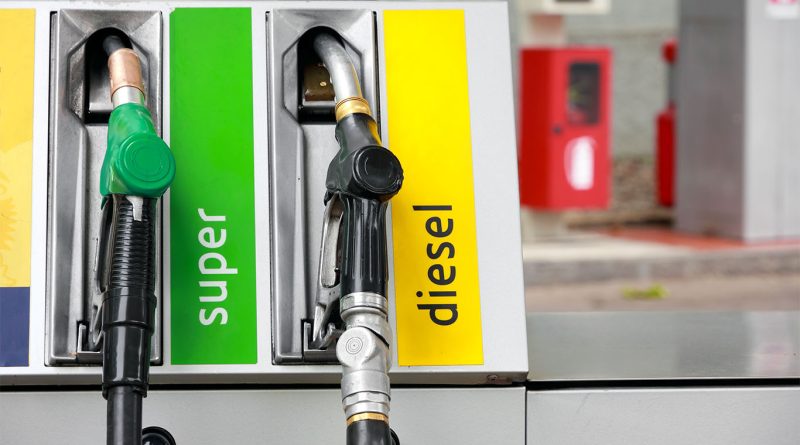
7 Reasons Gas and Diesel Prices Are So High Right Now

Gas prices have eased from their autumn peaks, but they remain far higher than a year ago, and diesel prices are still close to record levels. AAA put the national average for regular gasoline at $3.9081 a gallon on Nov. 12, down nearly 20 cents in a week but well above the $3.0752 of a year earlier, making November 2026 the most expensive November on record so far. Diesel averaged $6.0640 a gallon on Nov. 13, against $3.7648 a year before, and AAA’s all-time diesel record of $6.5276 was set only on Sept. 22. The 7 reasons below explain why fuel remains so expensive, and why diesel has risen much further than gasoline.
1. The Iran conflict has disrupted oil flows through the Strait of Hormuz
The single largest driver of higher fuel prices in 2026 is the disruption to oil flows from the Middle East. The US Energy Information Administration (EIA) dates the de facto closure of the Strait of Hormuz to military action on Feb. 28, and the conflict involving Iran has restricted tanker traffic through one of the world’s most important oil shipping routes ever since.
The effect on crude prices has been severe and volatile. EIA reports that Brent crude reached $118 a barrel on April 29 before falling to $72 on June 26 as ceasefire talks raised hopes of reopening the strait. Prices climbed again as uncertainty returned. In its November outlook, EIA said crude prices rose for a third straight month in October, citing falling global inventories, “attacks on oil tankers in the Persian Gulf,” constrained shipping capacity, and higher transportation costs.
Crude matters because it is the largest single component of the retail price. EIA data for August 2026 shows crude oil accounting for 50 percent of the retail price of regular gasoline and 37 percent of the price of diesel.
Shipping costs add a further layer. Tanker rates and insurance premiums have risen sharply, increasing the cost of moving both crude and refined products, according to energy analyst Robert Rapier writing for OilPrice.com.
Recent weeks have brought some relief. Crude prices have fallen in November as traders bet on progress toward a resolution, and EIA forecasts Brent will average $104 a barrel in November and $99 in December. EIA assumes most Middle East production outside Iran returns to pre-conflict levels by mid-2027, which would bring Brent down to an average of $86 a barrel next year.
That outlook depends on events that remain uncertain. Until tanker traffic through the region returns to normal, crude prices are likely to stay sensitive to any change in the security situation.
2. Drone strikes have knocked Russian refineries offline
The second major cause of high fuel prices is a sustained campaign of Ukrainian drone strikes on Russian oil refineries, which has removed a large volume of refined fuel from global markets.
The scale of the damage is significant. The International Energy Agency (IEA) estimates that a Russian refinery was successfully hit by a drone about once every three days during the first eight months of 2026, according to OilPrice.com. By mid-September, three of Russia’s six largest diesel-producing refineries were either shut or operating at roughly a quarter of capacity. Those six plants together produce about half of Russia’s diesel, according to Reuters calculations cited in the same report.
The impact on Russian exports has been dramatic. Before the disruption, Russia shipped roughly 2.5 million metric tons of diesel a month. Trader estimates cited by Reuters put diesel exports below 1 million tons in June 2026. Buyers that relied on Russian fuel, including Turkey and Brazil, have had to look elsewhere, which is likely to have increased competition for supplies from other exporters, including the US.
The loss of Russian diesel compounds disruption elsewhere. EIA has cited reduced refining activity in Russia, China, and the Middle East as reasons for tight global distillate supplies, and it identifies attacks on energy infrastructure as a factor behind higher refining margins.
Dean Croke, Principal Industry Analyst at DAT, describes the problem as one of physical capacity rather than crude supply. “This is about infrastructure,” he says, pointing to attacks on refinery capacity as the real constraint.
That distinction explains why fuel prices can stay high even when crude prices fall. Damaged refineries take months to repair, and every attack pushes recovery further back. The likely effect is that global refined product markets will remain tight for as long as the attacks continue, regardless of what happens to the price of crude oil.
3. Russia and China are keeping fuel at home
Supply lost to damage is only part of the problem. Major producers are also choosing to keep fuel at home, reducing the volume available on international markets.
Russia has introduced a series of export bans to protect its domestic market. It imposed a full ban on diesel exports by producers on July 8 after drone strikes triggered shortages and price spikes at home. On July 30, the government extended its ban on gasoline and diesel exports through Jan. 31, 2027, according to The Moscow Times. Jet fuel exports are restricted under a separate decree.
The bans include some exceptions. From September, refineries rather than retailers have been allowed to export diesel, and ship fuel, gasoil, intergovernmental agreements, and humanitarian shipments are exempt. Even so, the policy has kept a substantial share of Russian output off the global market at a time when buyers are already scrambling for supply. When Russia first announced its diesel ban in July, benchmark European diesel margins rose to a record $60.17 a barrel, according to Reuters.
China has also curtailed fuel exports to protect domestic supplies, according to Reuters reporting cited by OilPrice.com. China and Russia are both normally significant sources of refined products for international markets, so restrictions from both at the same time remove an important buffer.
For US consumers, these policies matter even though the US produces most of its own fuel. Refined products trade on a global market, and when overseas buyers lose access to Russian and Chinese supply, they bid for cargoes from other exporters, including US refiners. That competition pulls prices higher at home.
The duration of these restrictions is uncertain. Russia has repeatedly extended its bans as drone attacks have continued. Until then, the bans are likely to keep global product markets tighter than crude supply alone would suggest.
4. Refining margins have soared
Refining margins, the gap between the price of crude oil and the price of the fuels made from it, have widened dramatically in 2026, adding to the cost of every gallon.
EIA measures these margins through crack spreads. In the second quarter of 2026, the average gasoline crack spread was 60 percent higher than a year earlier, while distillate and jet fuel crack spreads were more than double their year-ago levels because of tight international supply. In the third quarter, the gap widened further: the gasoline crack spread more than doubled year over year, and distillate and jet fuel crack spreads each almost tripled.
The New York Harbor distillate crack spread, a key benchmark for East Coast diesel, reached $1.42 a gallon in March, compared with a 2021–2025 average of 68 cents, according to EIA data reported by The Auto Wire.
These margins show up directly at the pump. In September, EIA said that retail gasoline averaged $4.35 a gallon and diesel averaged $6.29, driven by higher crude oil prices and rising crack spreads.
High margins are best understood as a symptom rather than an original cause. Robert Rapier argues that elevated refining margins are “a consequence of constrained diesel supply relative to demand rather than the original cause of the shortage.” With refineries in Russia, China, and the Middle East operating below normal levels, the refineries that are running can command higher prices for their output.
US refiners are responding by running hard. EIA reports that tight global markets are encouraging elevated US refinery operations, and it expects product crack spreads to widen in 2027 as supply constraints persist.
The likely implication for drivers and fleet operators is that refining costs will keep retail prices elevated even if crude prices fall further, because the bottleneck lies in fuel production capacity rather than in the supply of oil.
5. Record US exports are pulling barrels overseas
US exports are a further reason fuel prices are high at home. With global supply disrupted, overseas buyers have turned to the US for crude oil and refined products, drawing barrels out of the domestic market.
EIA reports that total US petroleum exports reached a record 13.6 million barrels per day (b/d) in April 2026, 15 percent above the previous record set in March. The agency attributes the increase to “disruptions to international crude oil and refined product flows through the Strait of Hormuz,” which raised global demand for US supply.
Crude oil made up the largest share, at 5.6 million b/d, 21 percent above the previous record from December 2023. Distillate fuel oil exports reached 1.6 million b/d, the highest since July 2017. EIA’s weekly estimates show that crude, distillate, jet fuel, and propane exports remained above five-year seasonal highs in May and June.
Price differences between US and international crude have reinforced the trend. EIA notes that a wide spread between Brent, the international benchmark, and West Texas Intermediate (WTI), the US benchmark, has encouraged exports, contributing to unusually low US crude inventories.
US refineries are producing at high levels, but exports have absorbed much of the extra output. US distillate production averaged about 5.1 million b/d through August, the highest since 2019, yet exports still pulled domestic distillate inventories down, according to Rapier.
The effect is that US prices are increasingly set by global conditions. Strong exports support US producers and refiners, and they help ease shortages abroad, but they also mean domestic buyers are competing with international demand for the same barrels.
Strong exports are likely to continue while overseas supply remains constrained. That suggests US fuel prices will stay linked to international disruptions, even with US crude production forecast by EIA to reach a record 14.3 million b/d in 2027.
6. Fuel inventories are running low
Low inventories leave the market with little cushion against further disruption, which keeps prices high and volatile.
Stocks of both crude and fuel have fallen well below normal levels. According to EIA data reported by The Auto Wire, national distillate stocks were 13 percent below the 2021–2025 average in the week ending Sept. 25, and gasoline stocks were 7 percent below. EIA’s November outlook reported US crude inventories of 410 million barrels at the end of October, the lowest end-of-October level since 2014.
The shortage is most acute on the East Coast, which depends heavily on fuel shipped from other regions and imports. East Coast distillate stocks were 32 percent below the five-year seasonal average in September, according to EIA’s October outlook, and the agency expects them to remain about 20 percent below the 2021–2025 average through the winter.
Low inventories matter because they reduce the market’s ability to absorb shocks. When stocks are ample, a refinery outage or shipping delay can be covered from storage. When stocks are thin, the same event can push prices up sharply, because buyers compete for limited supply.
There are early signs of rebuilding. AAA reported that US crude inventories rose 4.7 million barrels to 414.4 million in the week before its Nov. 12 update, leaving them 4 percent below the five-year average. Total domestic gasoline supply rose from 209 million to 210.8 million barrels over the same week, according to EIA figures cited by AAA. Lower autumn demand for gasoline and the seasonal switch to cheaper winter-blend fuel have also helped ease pump prices.
Distillate inventories are likely to remain the bigger concern. Winter brings additional demand for heating oil, which is closely related to diesel, and EIA’s forecast of East Coast stocks remaining well below average suggests limited room for diesel prices to fall quickly in the months ahead.
7. Diesel faces pressures that gasoline does not
Diesel prices have risen far more than gas prices in 2026. EIA’s weekly data for Oct. 26 showed on-highway diesel at $6.352 a gallon, up $2.634, or about 71 percent, from a year earlier, while regular gasoline was up about 41 percent. The diesel premium over gasoline reached $2.083, compared with $0.683 a year earlier.
Part of the gap is structural. EIA data shows that diesel has cost more than gasoline almost continuously since September 2004. Since the mid-2000s, US refiners have had to produce ultra-low-sulfur diesel (ULSD), which required large investments in sulfur-removal equipment. Federal taxes are also six cents a gallon higher on diesel than on gasoline, and global demand for diesel and other distillates is strong across Europe, China, India, and the US.
The 2026 disruptions have hit diesel hardest. Russia was one of the world’s largest diesel exporters, and the loss of its supply, combined with refining outages in the Middle East and China, has left global distillate markets unusually tight. Refining costs make up a much larger share of the diesel price than of the gasoline price. EIA data for August shows refining accounting for 40 percent of the retail diesel price, compared with 24 percent for gasoline.
Industry analysts expect the premium to persist. Croke says, “Every time diesel drops and then rises, it always goes up from a higher base,” and DAT expects fuel surcharges and retail diesel prices to remain high through next year. Matt Muenster, Chief Economist at Breakthrough, says, “Our forecast places diesel prices at a similar level to 2027—real high.”
EIA’s November outlook supports that view. It forecasts diesel averaging $5.25 a gallon in 2026 and $5.03 in 2027, after raising its 2027 forecast by 12 percent from the previous month. That compares with forecast gasoline averages of $3.89 in 2026 and $3.73 in 2027.
The recent fall in gas prices reflects lower crude prices and seasonal factors, but the forces behind this year’s spike have not gone away. Disrupted Middle East shipping, damaged Russian refineries, export restrictions, strong overseas demand for US fuel, and thin inventories all point to a market with little spare capacity. EIA now assumes global product markets will face supply constraints through the end of 2027, and its forecasts keep both gasoline and diesel well above 2025 levels next year. For consumers and the energy industry alike, the likely outcome is a gradual easing rather than a return to pre-conflict prices, with diesel, and the freight costs that depend on it, recovering most slowly.