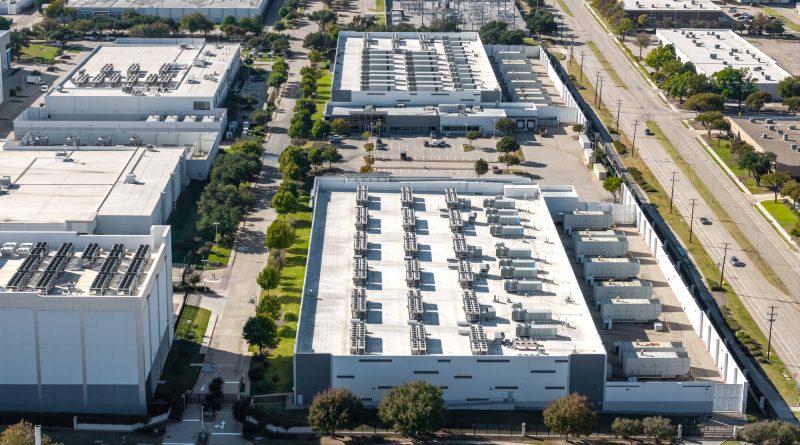
AI data centers are on track to consume one-fifth of US electricity

Subscribe to our free newsletter today to keep up to date with the latest energy, oil and gas news.
Artificial intelligence has become the defining technology race of the decade, but its biggest challenge may not be developing more capable models or designing faster chips. It may be finding enough electricity to power them.
According to a new BloombergNEF forecast, US data centers are on course to consume roughly 20% of the nation’s electricity by 2035, more than triple their current share. The revised outlook reflects the rapid pace of AI investment as cloud providers and technology companies build increasingly large computing facilities to train and run sophisticated AI models.
The forecast represents more than another milestone in AI’s growth. It signals a structural shift in electricity demand that is forcing utilities, regulators and industrial users to rethink long-term infrastructure planning. As AI becomes embedded across business and society, electricity is emerging as one of the industry’s most valuable strategic resources.
AI’s rapid expansion is rewriting electricity demand forecasts
For years, data center growth tracked the steady expansion of cloud computing and digital services. The emergence of generative AI has fundamentally altered that trajectory.
Training and operating large language models requires thousands of high-performance graphics processing units working simultaneously, often around the clock. These clusters consume substantially more electricity than traditional enterprise computing while requiring sophisticated cooling systems to maintain performance and reliability.
BloombergNEF projects US data center electricity demand could reach approximately 194 gigawatts by 2035, representing an 83% increase from its previous forecast. The revision illustrates how quickly expectations have changed as technology companies accelerate investments in AI infrastructure.
The demand extends beyond training frontier models. Every AI-powered search query, chatbot interaction, image generation request and enterprise application adds to the computing workload. As businesses integrate AI into everyday operations, inference workloads are expected to account for a growing share of electricity consumption.
The pace of development has surprised both the technology and energy sectors. Utilities that previously forecast gradual increases in demand are revising long-term capacity plans as hyperscale operators announce successive waves of new facilities across the US.
The power grid faces pressure that extends well beyond data centers
The implications reach far beyond the technology sector.
Many regions already face transmission constraints, lengthy grid connection queues and limited generation capacity. States such as Virginia and Texas, which host some of the world’s largest concentrations of data centers, are expected to experience some of the greatest pressure as demand continues to rise.
Expanding electricity generation alone will not solve the problem. Significant investment is also required to modernize transmission networks, upgrade substations and improve grid resilience. These projects often require years of planning, regulatory approval and construction, creating a mismatch between the rapid pace of AI investment and the slower development of energy infrastructure.
Industrial manufacturers may also feel the effects. Increased competition for electricity could contribute to higher wholesale power prices, particularly in regions experiencing rapid data center construction. Grid operators are already warning that maintaining reliability will become increasingly challenging as electricity demand accelerates.
Communities are also paying closer attention to the environmental footprint of large facilities. Beyond electricity consumption, modern AI data centers require substantial volumes of water for cooling, creating additional concerns in areas already facing water scarcity.
These competing pressures are transforming data centers from relatively invisible pieces of digital infrastructure into highly visible components of regional economic planning.
Technology companies are reshaping the future of energy investment
The technology industry’s response increasingly extends beyond purchasing electricity from utilities.
Major cloud providers, including Microsoft, Google, Amazon and Meta, are investing directly in long-term energy strategies to secure reliable power supplies. Those efforts include renewable energy projects, battery storage, natural gas generation and renewed interest in nuclear power, including small modular reactor technologies.
These investments reflect a growing recognition that access to electricity may become a competitive advantage. Companies capable of securing dependable, affordable energy will likely be better positioned to expand AI services as demand continues to grow.
The changing relationship between technology companies and the energy sector is creating new opportunities for utilities, infrastructure developers and equipment manufacturers. Demand for transformers, transmission equipment, cooling technologies and power management systems is expected to increase alongside AI infrastructure investment.
The direction appears increasingly clear. The next phase of AI development will depend as much on expanding physical infrastructure as on improving algorithms.
The race to build smarter AI is becoming a race to generate more electricity. Success will increasingly depend on whether the energy sector can deliver the capacity needed to support an economy that is becoming more computationally intensive each year.
Source