
Alan Dunne on why bridging the gap to a low carbon future requires a considered approach to gas

The announcement of new solar and wind farms is rightly met with celebration, as more and more grid energy can be sourced from renewables. What is rarely part of the conversation is that additional dispatchable or flexible power sources are needed to maintain grid stability when intermittent renewables aren’t able to meet demand.

Solar and wind power become available when nature delivers it, and that timing does not always align with power demand. The gap between net zero ambitions and grid stability can be closed with carefully thought-out deployment of gas generation, used on a temporary basis to make up for shortfalls in renewable energy provision.
Battery energy storage systems (BESS) are able to capture some of the renewable energy harvested and are ideal for addressing short-term fluctuations. Gas, on the other hand, excels at offering stable and consistent power, unaffected by the weather conditions that reduce peak output of wind and solar. The grid can use non-renewable energy to maintain constant frequency and voltage stability, even when low wind or cloud cover hamper renewable energy generation.
There is a clear case for combining the renewables, BESS and gas into one hybrid system. As the infrastructure for renewables is maturing, grid operators across Europe are using temporary 50MW+ natural gas packages in compact configurations, providing capacity resilience from a few months to many years.
Scaling to match demand
Deploying gas can be an energy efficient solution to bridging intermittency. Gas generators can run at 80 percent efficiency in combined heat and power (CHP) configurations when paired with heat and steam recovery. Modular generators can be scaled from single units to multi-MW installations to match demand. Crucially, they are grid-code compliant and designed to meet national regulations for frequency response and voltage control. This means that, rather than being back-up systems, they are complete grid assets.
Permanent infrastructure takes years to get fully functional, whereas temporary gas generation can be mobilized, delivering 200 MW+ within a few months. This means that gas can be used to smooth out any fluctuations in renewable power generation, support during seasonal peaks, as well as during infrastructure upgrades. These upgrades are necessary to deliver a low carbon future, but we cannot skip the steps needed to get them up and running. It is these steps along the journey that gas makes possible.
Baseload, plus batteries
The strengths offered by gas generation shouldn’t overshadow the positives of battery power, but rather show the current need for both to be used in tandem. Intelligent hybrid systems, like the kind deployed at a data centre in Dublin, use batteries to manage rapid fluctuations and peak shaving, while gas generation provides sustained baseload capacity.
In the example from Dublin, the data center used 14 MW of gas-fired generation and a 1MW BESS in order to be operational, while connections to the grid are being planned down the line. Batteries bear the brunt of rapid load changes and short-term peaks while the consistent baseload power comes from gas generators. This approach means major projects and critical facilities can be operational with reliable, scalable, and flexible energy.
SCADA platforms make remote connectivity, third-party system interoperability, and sophisticated load management possible and optimize each part’s contribution. By using a hybrid system with advanced controls, it is possible to exceed the efficiency and operational gains that either power type can achieve on its own.
Energy systems that are decentralized and can deploy closer to the point of consumption can reduce transmission loss and alleviate grid congestion. This has the added benefit of building resilience against widespread outages. Temporary modular gas platforms can deliver resilience where and when needed. Installations can be configured across multiple sites, providing distributed generation that supports local grid stability while reducing stress on transmission infrastructure.
Businesses using decentralized systems have operational certainty, safeguarding operations for critical processes such as manufacturing, infrastructure and data centers.
The reality of progress
There is of course criticism of any fossil fuel use, and it is only right that all use of non-renewable energy is closely monitored and scrutinized. Currently, we rely on the grid for an enormous portion of our lives, livelihoods, the economy and much of our healthcare. Two well-established principles are at play here: the grid must be kept stable, and we must transition to renewable energy. Rather than conflicting with one another, these provide framework for how to transition safely.
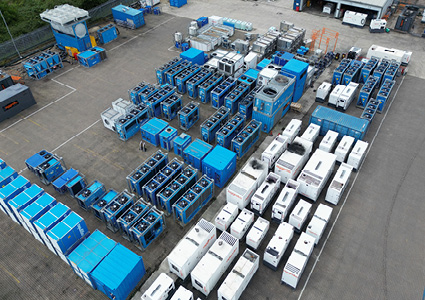
The energy transition is in progress and continues to move forward. Gas can provide the bridge we must traverse to see the grid fully decarbonized.
The infrastructure being deployed is temporary and adaptable. Unlike permanent power stations representing decades of capital lock-in, modular gas generation scales down as renewable capacity and storage solutions mature. The investment supports today’s needs without constraining tomorrow’s options.
Continued investment in developing renewables can be combined with the strategic use of hybrid systems, balancing gas, BESS and renewables to meet changing demand. This combination should be regularly reviewed and, giving more of the load to renewables as soon as that option becomes viable. And to become viable, gas-powered solutions are needed to bridge the current gap.
Alan Dunne
www.aggreko.com/en-gb
Alan Dunne is Managing Director, UK and Ireland at Aggreko. Aggreko is a global leader in engineered energy and temperature solutions. It designs, deploys and optimizes the flexible energy and temperature solutions that are essential to its customers’ operations. It works across all major industries, using experience of working in demanding environments and complex applications to engineer reliable, efficient and sustainable solutions that meet its customers’ needs, from critical emergencies to long-term energy security.