Amazon signs 20-year nuclear deal backing more than $3 billion in investment

Subscribe to our free newsletter today to keep up to date with the latest energy, oil and gas news.
Artificial intelligence may be sold as software, but its physical footprint is becoming harder to ignore as every new cluster of high-performance computing equipment requires electricity, cooling, transmission capacity and supporting infrastructure that cannot be deployed at software speed.
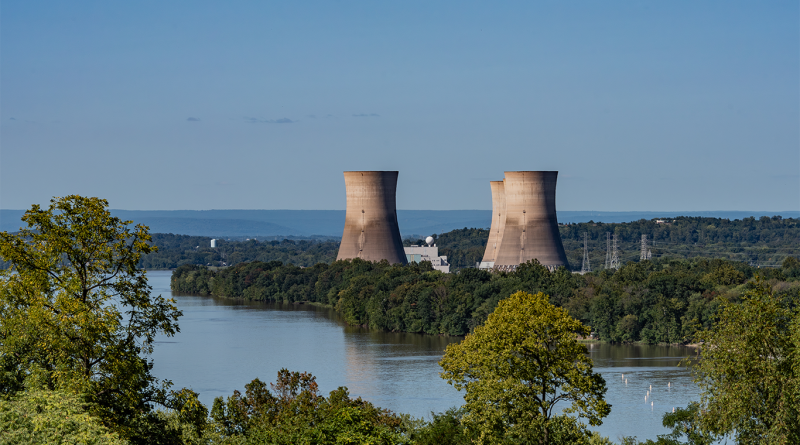
Amazon’s latest nuclear agreement puts that constraint into unusually clear numbers because the company has signed a 20-year power purchase agreement with Constellation tied to the Calvert Cliffs Clean Energy Center in Maryland. The agreement covers 690 MW of electricity and supports plans to add roughly 190 MW of generating capacity at the plant between 2030 and 2032.
Constellation said the agreement will support more than $3 billion in infrastructure investment in Maryland, including upgrades across the 1790 MW nuclear facility, making the transaction relevant not only to Amazon’s energy procurement strategy but also to wider questions about generation capacity and long-term grid investment.
The deal is more significant than a routine corporate power purchase because it shows how the rapid expansion of data centers is pulling large technology companies deeper into decisions about power plant investment, generation availability and the future structure of regional electricity markets.
Amazon is using an existing nuclear plant to address a new demand problem
Calvert Cliffs has operated for decades, but the economics surrounding the plant are being reshaped by a comparatively new source of electricity demand as hyperscale data centers require large volumes of power that must be available on a continuous basis.
The facility is Maryland’s only nuclear power plant, and its two reactors can produce up to 1790 MW of electricity, according to Constellation, which says that level of output is equivalent to the electricity consumption of more than 1.3 million homes.
Amazon’s agreement covers 690 MW, including approximately 190 MW of planned additional generating capacity, and Constellation intends to obtain that extra output through improvements to the existing plant rather than by constructing another conventional nuclear reactor.
That distinction matters for an electricity industry facing a growing mismatch between the pace of data center construction and the time required to develop new power plants, transmission infrastructure and other large-scale energy assets.
The agreement is tied to the regional grid rather than a dedicated physical connection between Calvert Cliffs and an Amazon data center, which means electricity from the plant will continue to flow into PJM, the transmission organization covering all or parts of 13 states and the District of Columbia. Amazon and Constellation have also entered into a retail supply arrangement covering Amazon operations within the PJM market.
This structure points to a broader change in corporate electricity procurement because a large buyer does not need to reserve a generating plant exclusively for its own facilities to influence investment in power supply. Long-term purchasing commitments can provide generators with greater revenue visibility while supporting capital spending that increases capacity available to the wider electricity system.
For Calvert Cliffs, that commitment could have consequences well beyond the planned uprate because the plant’s Unit 1 operating license expires in 2034 and Unit 2 is licensed through 2036. Constellation says Amazon’s long-term agreement will support efforts to pursue another 20 years of operation, linking new digital infrastructure with the potential extension of an established nuclear asset.
Data centers are changing the electricity planning equation
The scale of projected electricity demand helps explain why technology companies are looking beyond conventional procurement strategies and taking a more direct interest in generation assets, transmission capacity and long-term power availability.
PJM said its 2025 long-term forecast projected summer peak electricity use rising by about 70 GW to roughly 220 GW over 15 years, while the grid operator has separately projected that data center growth could add about 30 GW of demand between 2025 and 2030.
For comparison, PJM reported a record summer peak of 165 GW in 2006, which illustrates how sharply the planning environment could change if current projections for data center development and broader electricity use are realized.
These forecasts make data centers one of the central variables in regional electricity planning because, unlike many commercial developments, large computing campuses can require hundreds of megawatts at individual locations while operating continuously throughout the day.
That requirement has drawn renewed attention to nuclear generation, particularly among large technology companies that need access to substantial amounts of electricity without relying on a single generation source.
Solar and wind generation remain major components of corporate carbon-free energy portfolios, including Amazon’s, but nuclear plants offer a different operating profile because they can generate electricity continuously across day and night.
For hyperscale computing operators, the attraction is less about choosing one generation technology over another and more about building a portfolio capable of supporting a rapidly expanding network of power-intensive facilities with different operating and geographic requirements.
The Calvert Cliffs agreement gives Amazon exposure to an existing source of generation while supporting incremental new capacity, and it does so without isolating that production from the shared regional grid.
That model could become more relevant as utilities, grid operators and regulators debate how the costs of serving large data center loads should be allocated among corporate customers, generators and the wider electricity market.
The central issue is no longer simply whether enough electricity can be produced, because the industry must also determine where that supply will come from, how quickly generation and transmission can be added, who will finance the investment and how new large loads affect existing customers.
Existing reactors could bridge the gap to next-generation nuclear
Amazon’s nuclear strategy extends beyond plants that are already operating, with the company also investing in technologies intended to expand nuclear generating capacity over a longer time horizon.
Amazon has invested $500 million in X-energy as part of an effort to advance small modular reactor technology, while Amazon and X-energy are targeting more than 5 GW of new nuclear capacity in the US by 2039.
Amazon is also working with Energy Northwest on the Cascade Advanced Energy Facility in Washington state, where the project is planned to begin with four X-energy Xe-100 reactor modules capable of generating a combined 320 MW and could eventually expand to 960 MW.
Those projects represent a different part of Amazon’s nuclear strategy because Calvert Cliffs is based on existing infrastructure, established reactor technology and planned increases in output from an operating plant, while the X-energy program is intended to support a new generation of smaller reactors that could be deployed in a more modular format.
The timing gap between the two approaches is a central part of the strategy because Amazon has acknowledged that advanced small modular reactors have not yet been demonstrated at commercial scale, even as the company invests with the expectation that the technology could contribute substantial generating capacity in the next decade.
Existing nuclear facilities can potentially address demand sooner, particularly where operators can extend plant life or increase output from current reactors, giving large electricity buyers access to additional firm generation while new reactor designs move toward commercial deployment.
For industrial planners, utilities and technology executives, the implications extend beyond one Amazon contract because artificial intelligence is turning electricity procurement into a strategic infrastructure question that reaches into generation, transmission, capital spending and long-term energy planning.
The companies building data centers are no longer concerned only with securing servers, semiconductors and network capacity, as they are becoming increasingly involved in the economics of power plants, transmission systems and generation projects designed to operate for decades.
Amazon’s agreement at Calvert Cliffs illustrates that shift by showing how a technology company’s long-term electricity demand can support existing nuclear generation, additional plant capacity and broader infrastructure investment at the same time.
The next stage of AI expansion may therefore be constrained not only by the availability of computing hardware, but also by the number of megawatts that regional power systems can reliably deliver as demand grows.
Source:
Fox Business