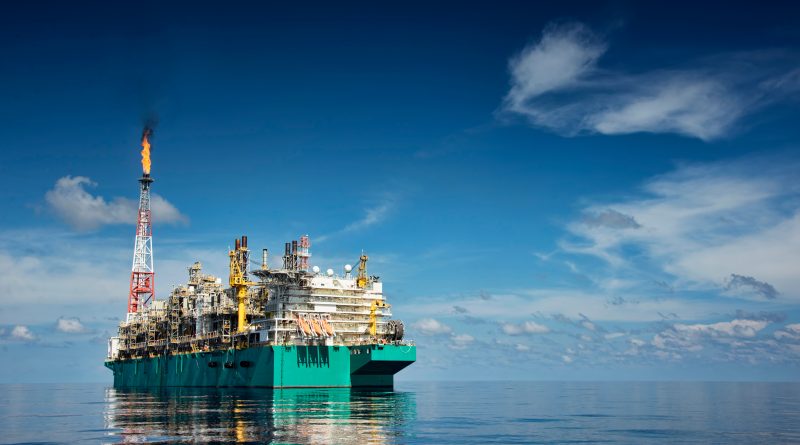
America is about to build its first floating LNG export terminal

Subscribe to our free newsletter today to keep up to date with the latest energy, oil and gas news.
The United States has spent decades building its position as the world’s leading exporter of liquefied natural gas, relying almost exclusively on large-scale onshore facilities along the Gulf Coast. That model has helped the country develop roughly 15.4 billion cubic feet per day of LNG liquefaction capacity and establish itself as a key supplier to energy markets across Europe, Asia and Latin America.
Federal regulators have now approved the country’s first floating LNG export terminal, opening the door to a new type of offshore infrastructure that could alter how LNG projects are financed, built and operated.
The project, led by Houston-based Delfin Midstream, represents a $5 billion investment and introduces a model that has gained traction internationally but has yet to be deployed in American waters.
Located about 40 nautical miles off the coast of Cameron Parish, Louisiana, the Delfin LNG development will become the first floating liquefied natural gas export facility in US history. The project is expected to include the largest floating LNG vessel ever constructed, underlining growing industry confidence in offshore LNG infrastructure.
After years of delays, America’s first floating LNG export project is moving ahead
The approval marks the end of a lengthy regulatory process that began nearly a decade ago. Delfin LNG first received conditional approval in 2017 but faced repeated delays as developers navigated permitting requirements, market uncertainty and shifting political priorities.
Progress accelerated in June 2026 when the company announced a Final Investment Decision, allowing construction and financing activities to proceed. The project’s ownership structure reflects support from a range of global energy and infrastructure investors.
Global Infrastructure Partners, now part of BlackRock, has joined the venture alongside Japanese shipping company Mitsui O.S.K. Lines and international energy trader Vitol. Financing support has also come from major lenders including MUFG, which announced a multibillion-dollar financing package tied to the development.
A significant milestone was the award of a $2.9 billion construction contract to South Korea’s Samsung Heavy Industries. The shipbuilder will construct the project’s first floating liquefaction vessel, known as FLNG 1, which is expected to export 4.4 million tonnes of LNG annually.
The facility will connect to the existing UTOS pipeline system, one of the largest natural gas pipelines in the Gulf region. Rather than constructing extensive new onshore infrastructure, the project will transport gas directly from Louisiana’s mainland pipeline network to floating liquefaction units positioned offshore.
Production and exports are currently expected to begin between 2029 and 2030.
Why floating LNG is attracting billions of dollars in investment
Floating LNG has become one of the energy sector’s most closely watched infrastructure models because it addresses several challenges associated with traditional export terminals.
Conventional onshore LNG projects often require years of site preparation, environmental reviews, land acquisition and large-scale construction. Development timelines of four to six years are common, while cost overruns remain a concern across the sector.
Floating LNG facilities offer a different approach. By constructing processing equipment and vessel structures simultaneously in specialized shipyards, developers can shorten construction schedules and improve project execution.
The offshore model also allows operators to make use of existing pipeline infrastructure rather than developing entirely new networks. In the case of Delfin LNG, the use of underutilized subsea pipelines reduces the need for major coastal construction and limits the amount of new infrastructure required onshore.
Flexibility remains one of the most attractive aspects of the technology. Floating facilities can access offshore gas resources that might otherwise remain uneconomic to develop. In some cases, floating assets can be redeployed after a project’s productive life has ended, creating value that fixed infrastructure cannot provide.
The model has already gained acceptance in international markets, where floating LNG facilities have helped developers monetize gas reserves in locations where traditional export terminals would have been difficult or expensive to build.
The environmental debate surrounding offshore LNG expansion is only beginning
Supporters of floating LNG frequently point to environmental advantages when compared with large industrial facilities onshore.
Many floating storage and regasification units are created by converting existing LNG carriers rather than constructing entirely new vessels. Industry estimates suggest this approach can reduce lifecycle emissions associated with construction while extending the useful life of existing maritime assets.
Floating facilities also typically require a smaller physical footprint than large coastal processing plants. Reduced land disturbance and lower infrastructure requirements have become central arguments among proponents seeking regulatory approval for offshore projects.
Critics remain unconvinced.
Environmental organizations including Healthy Gulf and the Louisiana Bucket Brigade have questioned both the approval process and the project’s broader climate implications. Advocacy groups argue that the final license was granted without sufficient environmental review and have raised concerns about the impact on fisheries, coastal communities and marine ecosystems.
Safety concerns have also resurfaced following previous incidents involving pipeline infrastructure near the Louisiana coastline. Opponents contend that offshore LNG development introduces operational risks that warrant greater scrutiny before construction begins.
The debate reflects a broader challenge facing the global energy industry. Governments and companies continue to balance rising demand for reliable energy supplies with pressure to reduce emissions and limit long-term fossil fuel investment.
What Delfin LNG reveals about the future direction of American energy exports
Whether viewed as an engineering milestone or a controversial expansion of fossil fuel infrastructure, the Delfin project signals a new chapter for the US LNG industry.
Global demand for LNG remains strong as countries seek to strengthen energy security, diversify supply chains and reduce dependence on coal-fired power generation. At the same time, developers are looking for ways to bring export capacity online more quickly and at lower cost.
Floating LNG offers a potential solution to both challenges.
The success or failure of Delfin LNG will be closely watched by investors, regulators and competing developers evaluating future offshore opportunities. If the project performs as expected, it could encourage additional floating LNG investments across the Gulf Coast and other regions with established gas infrastructure.
For decades, America’s LNG growth story has been built on large land-based facilities. The approval of the country’s first floating export terminal suggests the next phase of expansion may take place offshore, reshaping how energy infrastructure is developed in one of the world’s most important export markets.
Source