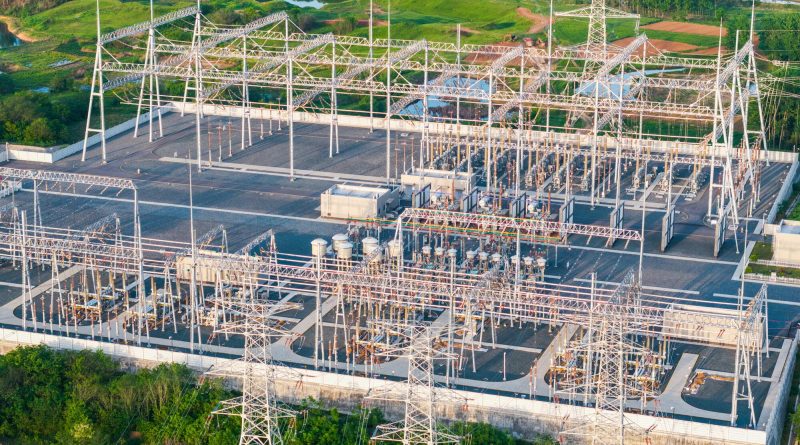
America’s largest power grid plans to curb electricity to AI data centers

Subscribe to our free newsletter today to keep up to date with the latest energy, oil and gas news.
The artificial intelligence boom has created a new race among technology companies, but the next competitive battleground may not be computing power. It may be electricity.
PJM Interconnection, the largest regional power grid operator in the US, has proposed new rules that would allow it to temporarily reduce electricity supplied to the largest power users, including hyperscale data centers, during periods of extreme strain on the grid. The proposal reflects growing concern among utilities that electricity demand from AI infrastructure is increasing faster than new generation and transmission capacity can be built.
The proposal signals a shift in how grid operators are approaching one of the fastest-growing sectors of the digital economy. Rather than treating data centers as untouchable infrastructure, utilities are beginning to view them as flexible consumers that can help stabilize electricity networks when supply becomes constrained.
The AI boom is changing electricity planning across the US
Artificial intelligence has become one of the largest new drivers of electricity demand in decades. Training and operating large language models requires enormous computing capacity, prompting cloud providers and technology companies to build increasingly large data centers equipped with thousands of graphics processing units running around the clock.
This rapid expansion is forcing utilities to rethink long-established planning assumptions. Electricity demand, which remained relatively flat across many regions for years because of energy efficiency gains, is now climbing as AI, cloud computing and digital infrastructure investments accelerate.
Recent estimates from S&P Global Commodity Insights suggest US data center electricity demand has nearly tripled since 2020, exceeding 64 gigawatts of capacity. The figure is expected to continue rising as companies expand AI services and invest billions of dollars in new facilities.
Electricity infrastructure, however, cannot be expanded at the same pace. New transmission lines often require years of regulatory approvals, while major generation projects can take even longer to complete. Utilities are therefore balancing the need to support economic growth with the responsibility to maintain reliable electricity supplies.
Northern Virginia illustrates the challenge more clearly than almost anywhere else. Home to the world’s largest concentration of data centers, the region has become central to discussions about power availability, transmission constraints and long-term infrastructure investment.
PJM wants flexibility before the next electricity emergency
PJM Interconnection manages electricity across 13 states and Washington, DC, serving more than 65 million people. Its proposal would establish a registry for exceptionally large electricity users, allowing the grid operator to temporarily curtail their power consumption during periods when electricity supplies become critically constrained.
The objective is not to interrupt routine operations. Instead, the proposal gives PJM another tool to manage exceptional circumstances that could otherwise threaten broader grid reliability.
The approach reflects the growing role of demand response programs, which encourage large consumers to reduce electricity use when the grid is under stress. Industrial manufacturers have participated in similar programs for years, but AI data centers represent a new category of customer whose power requirements can rival those of small cities.
For data center operators, participation could require greater investment in backup generation, battery storage and workload management systems capable of shifting computing tasks between facilities. Some technology companies are already exploring ways to distribute AI processing geographically, allowing workloads to move to regions where electricity is more readily available.
That flexibility could become a competitive advantage as electricity availability joins land, fiber connectivity and tax incentives as major factors influencing where new AI facilities are built.
Electricity is becoming a strategic asset for AI
PJM’s proposal highlights a broader reality confronting both the technology and energy sectors. Building more powerful AI systems is no longer simply a matter of developing faster chips or better algorithms. Access to reliable electricity is emerging as one of the industry’s most significant constraints.
Technology companies are responding by investing directly in energy infrastructure, signing long-term renewable energy agreements, developing on-site generation projects and evaluating nuclear power as a potential long-term source of reliable electricity.
Utilities, meanwhile, are under pressure to accelerate transmission upgrades, integrate new generation capacity and modernize grid operations without compromising reliability for residential and commercial customers.
PJM’s proposal may prove to be an early example of how grid operators adapt to an economy increasingly shaped by artificial intelligence. Rather than viewing AI infrastructure solely as a source of rising demand, utilities are beginning to treat large data centers as active participants in maintaining system stability.
As AI continues to reshape industries worldwide, electricity availability may become just as important as computing power in determining where the next generation of digital infrastructure is built.