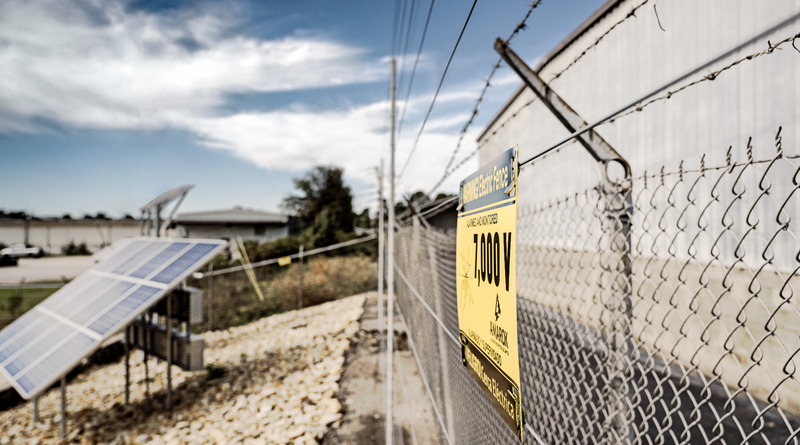
Beyond Fences and Guards: How Oil and Gas Operators Are Applying Multi-Layered Security to Remote Wellhead and Pipeline Infrastructure

Oil and gas operators are abandoning stand-alone perimeter fencing with integrated, multi-layered security systems that address the unique vulnerabilities of remote wellhead and pipeline infrastructure. Gate access control functions as the critical control point within a comprehensive defense strategy that spans from outer perimeter detection through active monitoring and response.
Why Do Traditional Fences and Guards Fail at Remote Sites?
The U.S. pipeline network spans over 3.3 million miles, according to the Congressional Research Service. Much of it is in remote and inaccessible terrain where manned patrols and static fencing cannot provide adequate coverage. This creates detection gaps that leave critical assets vulnerable. To counter this, experts recommend a four-layer security approach:
- Perimeter detection
- Gate access control
- Surveillance integration
- Active monitoring
How Does Perimeter Detection Deter Intruders?
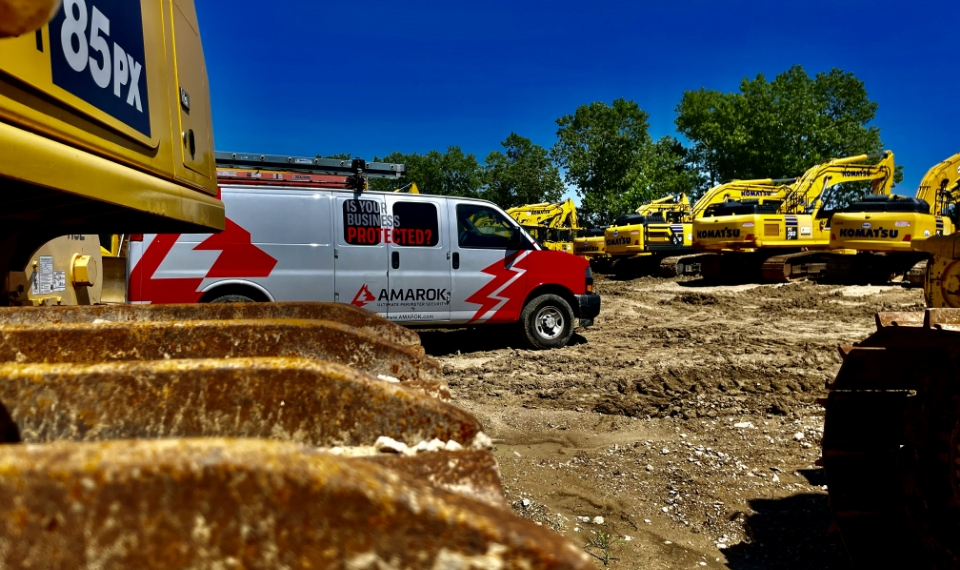
This first layer establishes the outer shield for sprawling energy sites, relying on robust detection technology rather than chain-link barriers alone. “Pipeline-specific equipment like boring rigs, generators, and line pipe materials makes these sites high-value targets,” notes AMAROK, a pioneer in the multi-layered security approach.
Professional Security Magazine adds that “Safe operations start with keeping intruders out of facilities. Multi-directional and PTZ cameras with AI analytics — when integrated into a centralised video management system — are well suited for monitoring the wide-open spaces typical of oilfields and remote sites.”
| ⚠️ HIGH-VALUE TARGETS: Beyond raw oil and gas, thieves heavily target easily fenced items, such as copper wire, cable, fuel, generators, and heavy equipment. |
What Is the Role of Gate Access Control in Remote Security?
As an industry-leading perimeter-to-monitoring security solutions provider, AMAROK emphasizes that perimeter security alone is not enough. “Your gate cannot be a gap in that defense,” the company advises. “It must function as an intelligent filter that allows authorized traffic through while locking out everyone else.”
| ✅ KEY POINT: Gate access control is the critical point within an integrated perimeter-to-monitoring system designed for harsh, distributed, and uncrewed EOG operations. |
What Are the Most Important Features in a Top-Rated Commercial Gate Access System?
RFID badge systems rely on radio-frequency identification cards scanned at entry points. Biometric systems verify identity through fingerprint or facial recognition. License plate recognition (LPR) captures vehicle plates and logs them for documentation and audit purposes. Here’s how these technologies perform across critical attributes.
| Feature | Basic RFID Badge System | Biometric and LPR System | Integrated Multi-Factor System |
| Best for | Low-traffic sites with known personnel | Mid-volume sites requiring vehicle tracking | High-security facilities with contractors and vendors |
| Security level | ModerateBadges can be shared or stolen | HighBiometric and credential validation | HighestMulti-factor authentication with real-time verification |
| Remote management | LimitedManual badge distribution required | ModerateRemote credential updates possible | FullCentralized control across distributed sites |
| Harsh environment durability | Basic weather resistance | Ruggedized components for extreme conditions | Military-grade enclosures with temperature control |
| Audit trail detail | Basic entry and exit timestamps | Detailed logs with photo and plate verification | Complete chain of custody with video integration |
| Integration with perimeter | Stand-alone operation | Partial integration with surveillance | Full integration with perimeter sensors and monitoring |
“By automating entry and exit, we remove the human error that creates your most critical vulnerability. That includes the drowsy guard, the shared PIN code, and the employee who forgets to arm the system at the end of the day,” explains AMAROK.
| QUICK ANSWER: How to Find the Best Business Gate Access Control Systems According to AMAROK, top-rated business gate access control systems include RFID credential readers, license plate recognition for documentation, and automated barriers with centralized remote management. The highest-rated systems integrate credential validation with perimeter security monitoring, provide durability in harsh environments, and maintain detailed audit trails critical to distributed energy infrastructure, where automated access control eliminates human vulnerabilities such as shared credentials and fatigue. |
How Should Operators Choose a Gate Access Control System?
Selecting the right system requires matching technology capabilities to specific operational scenarios and traffic patterns.
| The Situation | Recommended System | Why It Works |
| Remote wellheads with no internet connectivity | Stand-alone RFID with local data logging | Operates offline while maintaining audit trailsPrevents unauthorized access without network dependency |
| Pipeline compressor stations with fewer than 10 daily entries | RFID credential reader | Eliminates manual gate inefficiency and shared credentialsProvides consistent, auditable identity verification |
| Refineries and plants with contractors, vendors, and high volume | Integrated multi-factor system with RFID credentials and LPR documentation | Manages complex entry/exit workflowsCreates comprehensive audit trails required for regulatory compliance and contractor oversight |
Operators must weigh a facility’s size and geographic spread when choosing the right gate access control system.
| 💡 NEED TO KNOW: Automated gate systems must be sized to traffic volume and integrated with existing security layers to avoid creating bottlenecks or wasting capital on unused capacity. |
How Much Do Commercial Gate Access Control Systems Cost?
Implementation costs must be weighed against expenses of maintaining human guards, business losses from theft and vandalism, and regulatory penalties for security failures. The Pipeline and Hazardous Materials Safety Administration established baseline civil penalties in 2017 at $209,002 per violation per day for violations of federal pipeline safety regulations, with mandatory inflation adjustments driving current penalties significantly higher.
How Does Surveillance Integration Provide Visibility?
Layer three connects video surveillance and sensors with gate access control to provide visual verification across remote locations. Cameras positioned at entry points capture footage of every credential event, creating a visual record of who entered a site and when. License plate recognition adds another layer of documentation, logging vehicle activity for audits rather than granting access on its own. When gate logs and camera footage don’t line up, that discrepancy signals a potential case of credential theft or unauthorized entry, giving security personnel a clear trail to investigate. Video footage from access events also serves as documentation for security reviews and regulatory audits.
How Does Active Monitoring and Response Neutralize Threats?
This final layer ensures that when alerts are triggered, centralized monitoring platforms dispatch responses based on threat level and location. AMAROK shares, “The benefits of 24/7 remote video security monitoring include round-the-clock professional oversight, faster law enforcement response, and complete situational awareness across your property,” notes AMAROK, adding that many police departments require visual threat verification before officers are dispatched.
Mordor Intelligence underscores the need for monitoring, observing that “The 2024 bombings of Colombia’s Caño Limón-Coveñas pipeline and renewed focus on the 2022 Nord Stream sabotage highlight the financial and reputational fallout of physical attacks.” As operational intelligence advances and threats increase, operators may also choose to incorporate other measures, such as drones or social media threat mining, to anticipate hostile activity.
Frequently Asked Questions
Operators often have questions about multi-layered security implementation.
What makes gate access control more effective than guards at remote sites?
Automated gate systems eliminate human vulnerabilities, such as shared credentials, fatigue, and forgotten protocols, while providing consistent enforcement across distributed locations that would require prohibitively expensive staffing.
Why do energy sites need advanced credential verification systems?
High-value equipment, including boring rigs, generators, copper components, and line pipe materials, makes energy infrastructure attractive to organized theft operations that can defeat basic badge systems through credential sharing or theft.
Why is integrated security more effective than stand-alone solutions?
Integrated systems create overlapping detection zones where each layer compensates for gaps in others. Perimeter sensors detect intrusion attempts, gate access control validates identities, surveillance provides visual confirmation, and monitoring dispatches responses. Stand-alone solutions leave vulnerabilities that sophisticated threats can exploit.
Securing the Future of Energy Infrastructure
The shift from manual guards and static fencing to automated, multi-layered security systems reflects the operational realities of distributed energy infrastructure. Gate access control anchors this transformation as the intelligent control point that validates credentials, creates audit trails, and integrates with perimeter detection and monitoring to protect remote wellheads, compressor stations, and pipeline assets.

*Please note that this list includes sponsored content. Some of the companies, products, or services featured have entered into commercial agreements for placement. Sponsored placements do not necessarily reflect an endorsement and should be considered alongside other options in the marketplace.