Big Oil is investing billions to sidestep Iran turmoil

Subscribe to our free newsletter today to keep up to date with the latest energy, oil and gas news.
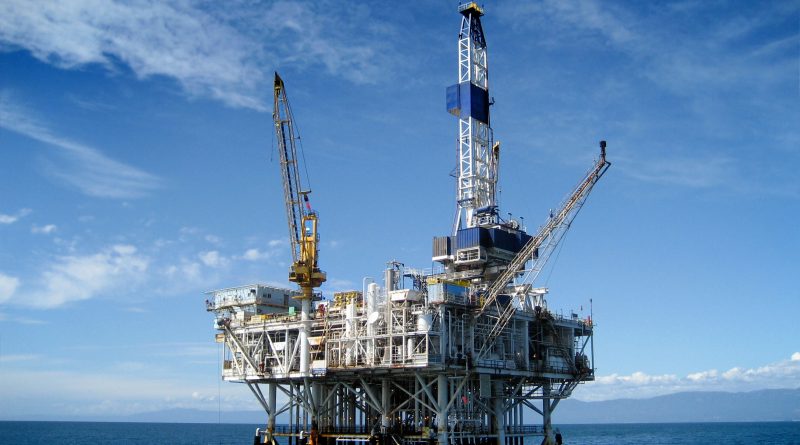
Oil majors are redirecting billions of dollars into offshore and frontier drilling projects far from the Middle East, as the Iran conflict disrupts global supply and raises the risk of prolonged instability in the Strait of Hormuz.
ExxonMobil is evaluating up to $24 billion in deepwater developments in Nigeria. Chevron is restructuring its Venezuela portfolio to concentrate on heavy oil assets. Across the industry, companies are expanding into regions such as offshore Africa and the eastern Mediterranean.
The common thread is geographic. Companies are prioritizing reserves that sit outside one of the world’s most exposed energy corridors, where disruption has already constrained flows and driven price volatility.
The strategy signals a shift in how oil majors define risk. It is no longer only about cost, emissions or project timelines. It is about whether barrels can reach market during periods of geopolitical stress.
Why Big Oil is spending again after years of restraint
This repositioning follows years of reduced capital spending across the industry. Oil companies had favored shorter-cycle investments and returned cash to shareholders rather than committing to large, long-term developments.
That approach is now being recalibrated. Disruptions tied to the Iran conflict have exposed structural weaknesses in global supply chains, with a significant share of global oil flows passing through the Strait of Hormuz.
In this environment, supply security carries greater weight. Long-cycle offshore projects, once seen as capital-intensive and less flexible, are being reassessed as stable sources of production that can operate outside the most volatile regions.
The shift does not signal a return to unchecked spending. Companies remain disciplined, but they are placing capital in projects that combine scale with geographic resilience. The emphasis is on assets that can deliver consistent output over decades, even as global conditions shift.
ExxonMobil’s Nigeria push highlights offshore resurgence
ExxonMobil’s renewed focus on Nigeria’s deepwater sector shows how this strategy is taking shape. The company is evaluating multibillion-dollar investments across several offshore assets, marking a return to projects that had previously been delayed.
At the center is the Owowo field, estimated to hold about 1 billion barrels of recoverable resources, with development costs projected between $7 billion and $8 billion. The nearby Bosi field could attract between $15 billion and $16 billion if it proceeds with a new floating production system and associated infrastructure.
These projects are designed for long-term output. Exxon has also secured an extension for the Erha production sharing contract through 2042, reinforcing its position in Nigeria’s offshore sector.
Nigeria’s investment climate has improved, with regulatory reforms aimed at stabilizing the industry and attracting capital. For Exxon, the combination of large resource potential and distance from Middle East disruptions strengthens the case for renewed spending.
The broader implication is that deepwater is regaining strategic importance. It offers scale, longevity and a degree of insulation from the most immediate geopolitical risks.
Chevron’s Venezuela strategy shows disciplined expansion
Chevron’s asset swap with Venezuela’s state oil company reflects a more targeted approach to growth. Instead of expanding broadly, the company is consolidating its position in heavy oil assets within the Orinoco Belt.
The move allows Chevron to focus on a smaller set of high-potential assets. Heavy oil projects are complex, but they offer substantial reserves and long production lifespans when managed effectively.
This strategy highlights a defining feature of the current investment cycle. Oil majors are not pursuing growth at any cost. They are refining portfolios to prioritize assets that deliver both scale and strategic relevance.
Venezuela remains a challenging environment, shaped by political uncertainty and sanctions. Its resource base, however, remains significant. Chevron’s decision to deepen its position while restructuring its holdings suggests that companies are willing to engage with complex regions when long-term returns justify the risk.
The global oil map is being redrawn by geopolitics
The developments in Nigeria and Venezuela reflect a broader shift across the industry. Geography has moved to the center of investment decisions.
Regions such as offshore West Africa, Latin America and emerging basins are attracting renewed attention. These areas offer large reserves that can be developed outside the most contested transit routes.
Risk has not disappeared. Political uncertainty, regulatory shifts and operational challenges remain part of the equation. What has changed is how those risks are weighed against vulnerabilities in traditional supply corridors.
As a result, the global oil map is evolving. Companies are seeking a balance between scale, stability and strategic positioning. The objective is not only to secure new reserves, but to ensure those reserves can be produced and delivered under a wide range of global conditions.
For executives and investors, the takeaway is clear. The next phase of oil supply will be shaped as much by geography as by geology.
Source