China’s new role in shaping global oil prices

Subscribe to our free newsletter today to keep up to date with the latest energy, oil and gas news.
For decades, oil markets operated on a familiar assumption. When geopolitical tensions threatened supply, producers, particularly Saudi Arabia and other OPEC members, determined whether prices stabilized or climbed. Supply disruptions, spare production capacity and export policy formed the foundation of oil market forecasting.
That framework is beginning to evolve.
Recent developments suggest China has acquired a different form of influence. Rather than acting as a swing producer, Beijing is emerging as what some analysts describe as a swing importer. Through vast strategic reserves, commercial inventories and a broader energy security strategy, China can reduce imports for extended periods while maintaining domestic consumption. The implications extend well beyond its own borders.
For oil producers, traders and refiners, this introduces a new variable into price formation. Demand from the world’s largest crude importer can no longer be treated as a fixed constant. China’s inventory management strategy is becoming a factor that may shape future volatility and market expectations.
China’s strategic reserves have become a market force rather than a safety net
Strategic petroleum reserves have traditionally been viewed as emergency assets. Governments build stockpiles to protect against wars, supply interruptions and economic shocks. China has spent more than two decades pursuing that objective, steadily expanding both state-controlled reserves and commercial storage capacity.
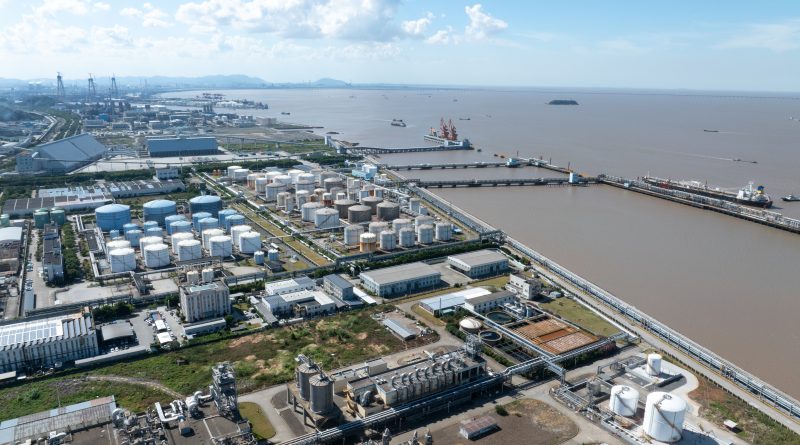
The result is one of the world’s largest oil inventory systems. Estimates suggest China holds roughly 1.4 billion barrels across strategic and commercial storage. That scale provides policymakers with flexibility few importing nations can match.
Recent geopolitical tensions highlighted the value of this approach. As concerns grew over Middle Eastern supply security, China sharply reduced waterborne crude imports while continuing to satisfy domestic demand. Instead of competing aggressively for cargoes during a period of uncertainty, the country relied on inventories already in storage.
The move represented a departure from traditional importer behavior. Major consuming nations have often increased purchases during periods of supply risk, contributing to higher prices. China’s ability to draw from reserves produced the opposite effect, reducing immediate demand pressure on global markets.
The size of the adjustment drew attention throughout the industry. Import reductions reached levels comparable to the combined oil consumption of several major European economies. Such flexibility would have been difficult to imagine a decade ago.
The significance extends beyond stockpiles. China’s broader energy strategy includes investments in nuclear power, renewable energy, electric vehicles and domestic infrastructure. Together, these initiatives reduce exposure to external supply shocks and provide greater room to manage oil imports according to market conditions.
For market participants, the message is straightforward. Chinese inventories are no longer passive assets held for emergencies. They have become active instruments of energy policy capable of influencing global market balances.
Why the emergence of a swing importer could change oil price dynamics
Oil markets have long relied on the concept of spare production capacity. Saudi Arabia’s ability to increase or reduce output has historically acted as a stabilizing mechanism during periods of disruption.
China introduces a different model.
Rather than adjusting supply, Beijing can adjust import demand. During periods of market stress, reserve drawdowns can reduce purchasing requirements. This lowers competition for available cargoes and can moderate upward pressure on prices.
The concept matters because demand-side flexibility has historically been limited. Most major economies consume imported oil as it arrives and maintain strategic reserves that are modest relative to total demand. China has built a buffer large enough to alter that equation.
The implications for price formation are significant. Geopolitical events often trigger immediate market reactions because traders anticipate shortages and increased competition for supply. If a major importer can temporarily reduce its presence in the market, part of that anticipated demand disappears.
This does not eliminate the impact of supply disruptions. A closure of key shipping routes or a major production outage would still affect global markets. What may change is the scale and duration of price spikes that have traditionally followed such events.
Energy trading models may also require revision. Forecasts built around production capacity, refinery demand and economic growth increasingly need to account for inventory behavior. China’s stockpile decisions are becoming almost as important as its consumption trends.
For commodity investors, this adds another layer of complexity. Traditional indicators of demand strength may not always reflect immediate purchasing activity. Inventory management can temporarily separate consumption from imports, creating market signals that differ from historical patterns.
What this shift means for OPEC, refiners and global energy security
The emergence of a swing importer presents strategic challenges for producers.
OPEC’s market influence has historically depended on balancing supply with global demand. If China’s import requirements become more flexible, forecasting demand growth becomes more difficult. Producer nations may face greater uncertainty when making output decisions.
Refiners must also adapt. Changes in Chinese purchasing patterns can reshape crude trade flows, tanker demand and regional pricing relationships. Periods of reduced Chinese imports may redirect cargoes to other markets, affecting procurement strategies and refining margins across Asia and beyond.
For importing nations, China’s experience offers a broader lesson in energy resilience. Strategic reserves are no longer simply insurance policies. When integrated into a wider energy framework, they can provide economic and geopolitical advantages.
The longer-term question is whether other countries will attempt to replicate elements of China’s approach. Building reserves on a comparable scale would require substantial investment, infrastructure and political commitment. Few nations possess the resources necessary to match China’s position.
Even so, the principle remains relevant. Greater flexibility in managing imports can reduce exposure to external shocks and strengthen negotiating power during periods of market stress.
Oil markets appear to be entering a new phase. Supply will remain central, but demand management is becoming a source of influence in its own right. China’s ability to alternate between inventory accumulation and inventory drawdowns has introduced a dynamic that traders, producers and policymakers can no longer overlook.
As geopolitics continues to reshape commodity flows, the world’s largest oil importer may become as influential as its largest exporters. The balance of power in oil markets is not disappearing. It is shifting into new hands.
Source