ExxonMobil’s Uaru startup lifts Guyana oil capacity to 1.1 million bpd

Subscribe to our free newsletter today to keep up to date with the latest energy news.
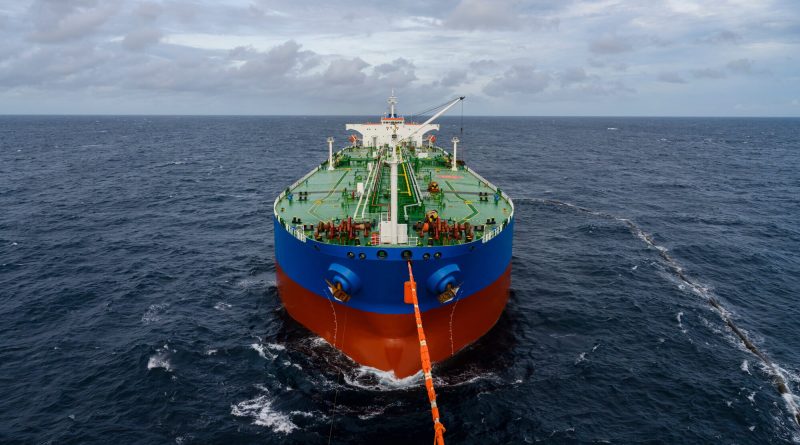
ExxonMobil has started production at Uaru, its fifth development in the Stabroek block offshore Guyana, raising the country’s installed oil production capacity to 1.1 million barrels a day.
The company announced the startup on Nov. 16. Uaru produces through the Errea Wittu, a floating production, storage, and offloading (FPSO) vessel. It joins the Destiny, Unity, Prosperity, and ONE GUYANA vessels already operating in the block. ExxonMobil expects the Errea Wittu to reach its initial capacity of 250,000 barrels a day in the first quarter of 2027.
That timing matters when reading the headline number.
The 1.1 million figure describes what Guyana’s offshore fleet is built to produce, not what it is pumping today. Uaru’s contribution will build over the coming months as the new vessel ramps up toward its initial capacity. A ramp-up phase is normal for any new FPSO: wells are typically brought online in stages, and processing systems are tested at rising rates before a vessel runs at full design capacity.
Even so, the startup adds to one of the fastest offshore build-outs in the industry. Dan Ammann, president of ExxonMobil Upstream Company, said Guyana had become one of the world’s fastest-growing and most important new sources of energy supply in just over a decade. “The startup of Errea Wittu is another major milestone for Guyana and ExxonMobil,” he said.
Uaru adds a fifth production vessel to the Stabroek block
Each Stabroek development so far has been built around its own FPSO. These ship-shaped facilities process oil from subsea wells, store it on board, and transfer it to tankers. That removes the need for a pipeline to shore, which suits fields located far offshore in deep water.
The Errea Wittu can store 2 million barrels of oil. Its name means “abundance” in the Warrau language, one of Guyana’s Indigenous languages. The vessel also marks the entry of MODEC, the Japanese FPSO specialist, into the Guyanese market, which widens the pool of contractors with experience in the country.
ExxonMobil Guyana operates the block with a 45% interest. Hess Guyana Exploration holds 30%, a stake that passed to Chevron through its 2025 acquisition of Hess. CNOOC Petroleum Guyana holds the remaining 25%.
The project’s benefits also reach beyond the oil itself. ExxonMobil said it and its co-venturers have spent more than $3.9 billion with Guyanese vendors since 2015.
Guyana’s rise adds supply from outside OPEC+
Guyana is not a member of OPEC or the wider OPEC+ alliance. Its output is not tied to the group’s production quotas, so each new FPSO adds barrels that the producer group does not control.
For OPEC+, that is a steady source of pressure. The alliance coordinates output among its members to support prices. Growth from non-member producers, including Guyana and the US, can offset the effect of any restraint the group agrees. No single new field changes that balance on its own, but a steady run of new vessels from one country adds up over time.
That pace gives Guyana a larger role in conversations about where future supply from outside OPEC+ will come from. It also raises the stakes for each new project. Because every Stabroek development relies on a single large vessel, a delay to one FPSO can hold back a meaningful share of the country’s planned growth.
Longtail points to the next phase for Stabroek
Uaru will not be the last addition for long. ExxonMobil said it has recently taken a final investment decision on Longtail, the eighth development on the Stabroek block.
Between them sit Whiptail and Hammerhead, the sixth and seventh developments, which are already approved and moving through construction.
Longtail marks a change in direction. Previous Stabroek projects have focused on oil, while Longtail targets gas and condensate-rich reservoirs. Condensate is a light liquid hydrocarbon recovered alongside natural gas, and it is generally sold in a similar way to a very light crude. That shift opens new questions for Guyana, including whether the gas can be brought to shore and used to support the country’s domestic energy needs.
For now, attention will stay on Uaru’s ramp-up. The Errea Wittu still has to reach its initial capacity, and the timing of that step will shape how quickly Guyana’s installed capacity turns into actual production.
The bigger question is how long Guyana can keep adding capacity at this pace, and how other producers, inside and outside OPEC+, will respond as it does.
Source:
ExxonMobil