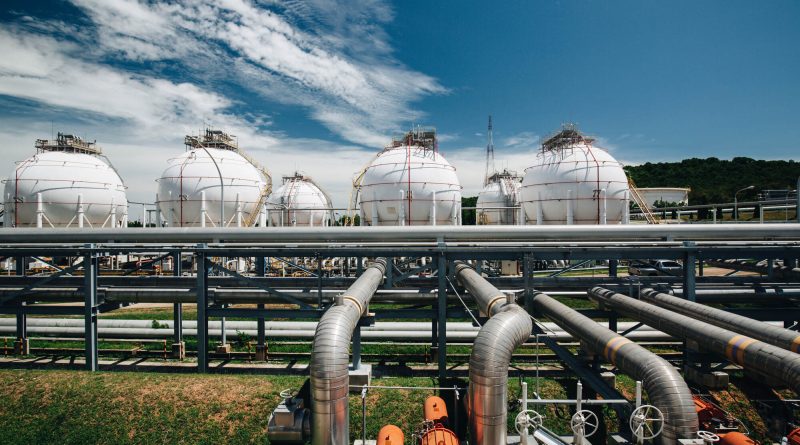
FERC clears Cheniere’s Sabine Pass expansion as US LNG pushes ahead

Subscribe to our free newsletter today to keep up to date with the latest energy news.
The Federal Energy Regulatory Commission (FERC) has approved Cheniere Energy’s Sabine Pass expansion. The order authorizes 3 additional liquefaction trains at the existing Sabine Pass LNG Terminal in Cameron Parish, Louisiana, along with a new interstate pipeline to supply it.
Reuters reported that the 3-train project would expand the plant by 20 million metric tons per annum (mtpa). Cheniere is the largest exporter of liquefied natural gas (LNG) in the US.
The decision was 1 of 5 gas infrastructure approvals FERC issued on Nov. 19. The commission voted unanimously on all 5. The other 4 add pipeline capacity in Virginia, West Virginia, New Mexico, Texas, and Mississippi, plus a new LNG storage plant in Virginia.
For Cheniere, the order clears a major federal permit. It does not commit any money to construction. The company has not yet taken a final investment decision (FID), and that is the step that turns a permitted project into a working site.
FERC approval brings the Sabine Pass expansion closer to a final investment decision
Cheniere described the approval as a milestone on the way to a positive FID on the project’s first phase. It also thanked FERC, noting that the review had taken several years.
According to Reuters, the first phase is expected to add more than 6 mtpa of liquefaction capacity by the early 2030s, and that volume has already been sold under long-term contracts. Cheniere says it has secured financing for 50% of Phase 1 and has spent about $500 million on early works.
Those details matter more than the headline capacity.
Long-term sales contracts usually underpin the financing of large LNG projects, because they give lenders confidence that the plant will have buyers for decades. Cheniere has historically paid for half of each expansion itself and borrowed the other half from banks. With Phase 1 contracted and half of its financing in place, the company appears to have much of the commercial groundwork done before the investment call.
Earlier in November, Cheniere President Zach Davis told analysts on an earnings call that the company was well positioned to reach FID on the first phase in the coming months.
The rest of the expansion is less defined. Phase 1 accounts for roughly a third of the approved capacity, which leaves around two-thirds still to be scheduled.
5 approvals in 1 day widen the US gas infrastructure picture
The 4 other projects are smaller than Sabine Pass, but each adds capacity to move or store gas.
Mountain Valley Pipeline’s MVP Boost project covers Montgomery County, Virginia, and Wetzel, Braxton, and Fayette counties in West Virginia. It adds 600,000 dekatherms per day (Dth/day) of firm transportation capacity. Dekatherms measure the energy content of gas rather than its volume.
The Forza Pipeline will run about 36 miles across New Mexico and Texas and provide up to 750,000 Dth/day of firm transportation. In Mississippi, Texas Eastern will extend its Line 31 in Madison County and add a delivery lateral and a compressor station, providing 125,000 Dth/day of new firm service.
Columbia Gas Transmission’s Southeast Virginia Energy Storage project in Sussex County, Virginia, includes a new LNG storage plant with up to 10,000 Dth/day of liquefaction capacity.
FERC’s announcement does not link these projects to Sabine Pass. Read together, though, they show the commission approving a sizable batch of gas infrastructure in a single meeting, from an export terminal to interstate pipelines and gas storage.
Export capacity only works if gas can reach the coast, and new pipelines only make sense if there are buyers at the other end. The Sabine Pass order covers both sides of that equation for Cheniere, because it pairs the new trains with their own supply pipeline.
Timing and financing will decide what the approval is worth
FERC Chairman Laura Swett presented the approvals as results that will shape America’s energy future. It is harder to judge from 1 day of decisions whether a single meeting signals faster federal permitting across the board.
The next milestones now sit with Cheniere and its lenders rather than with regulators. An LNG train takes years to build, so the investment decision, not the permit, will set the real timetable for Phase 1.
Several questions remain open. When will Cheniere take FID on the first phase, and can it hold to its early-2030s target? How will it phase the remaining capacity at Sabine Pass? And as more US export capacity moves toward construction, will long-term buyers keep signing contracts at the pace these projects need?
Source:
Federal Energy Regulatory Commission
Reuters via Finwire