Genesis Energias is reshaping Honduras’ energy landscape through LNG infrastructure and cleaner power generation

Genesis Energias is reshaping Honduras’ energy landscape through LNG infrastructure and cleaner power generation
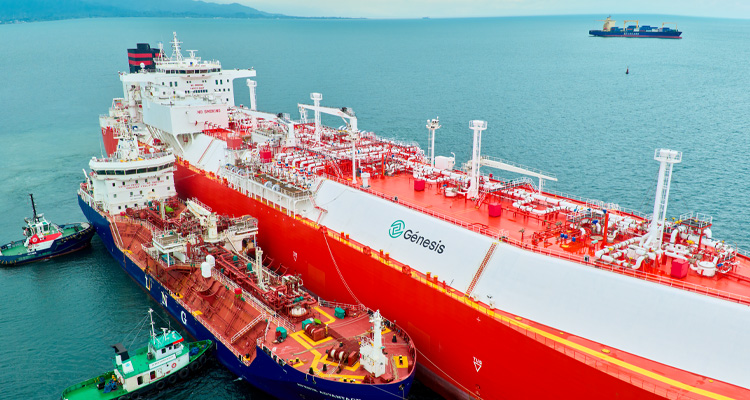
Genesis Energias started the solution to a problem: we needed a way to bring liquefied natural gas (LNG) to Honduras to supply our 240MW, combined cycle power plant, called Brassavola,” begins Martín Azcárate, President. “Genesis was founded to develop and operate the first LNG storage terminal in Honduras. To make that possible, we chartered a vessel, the Bilbao Knutsen, that will serve as a floating storage unit (FSU) with a storage capacity of 138,000 cubic meters, to act as the heart of the terminal.
“While the possibility of building onshore cryogenic tanks exists and the technology is somewhat used nowadays, the FSU approach, in our opinion, presented a much more robust solution. The CapEx efficiency, the flexibility of an FSU and, most importantly, the safety of using a vessel as the main storage solution for LNG far outweighed any advantage the onshore tanks could have.
“Without a doubt, it is a fantastic option and having a very experienced crew on board in charge of its operation gives the whole terminal a guarantee of efficiency and safety that seems harder to replicate with an alternative solution.”
Since the terminal capacity will far exceed the Brassavola power plant’s needs, it has been designed to carry out the transfer of LNG both ashore and to smaller international LNG carriers in its cryogenic state (around -167°C). The supply has been secured through one of the world’s largest LNG suppliers, Centrica, which was selected through an international competitive tender process.
“The LNG terminal is under construction and expected to be operational by the first quarter of 2028,” he continues. “As such, we have hired another smaller vessel, the Clean Energy, to start operating with ship-to-ship operations from the Bilbao and immediately start supplying Brassavola power plant with LNG.”
The project represents a transformative energy initiative for Honduras, combining reliable power generation with critical fuel import and distribution infrastructure. At its core is a 240 MW combined-cycle power plant that generates electricity using natural gas and supplies power to the national grid under a long-term, binding power purchase agreement (PPA) with the national utility.
The development marks a significant shift in the country’s energy landscape. Honduras has historically relied heavily on bunker fuel and diesel for both baseload and peak electricity generation, resulting in higher operating costs and greater environmental impact. The introduction of LNG into the national energy mix will diversify fuel sources, enhance system flexibility, and improve energy security. At the same time, it is expected to lower electricity generation costs and substantially reduce emissions compared with traditional liquid fuels, supporting a cleaner and more sustainable energy future for the country.
“The main driver behind the project was the historical shortage of electricity supply and the ever-growing energy demand of a country that is constantly developing,” Martín shares. “The country currently faces a structural power deficit of approximately 300 MW, driven by sustained growth in electricity demand. This shortfall is expected to persist over the long term and, despite the implementation of rationing measures, has resulted in an increasing frequency of power outages. The significant social and political consequences of unmet energy demand have created a strong alignment between the government, ENEE (Honduras’ National Electric Energy Company), and private sector participants in pursuing a reliable and sustainable solution to the country’s energy needs.
“At the same time, Honduras has committed to the objectives established under COP26 and is actively working to phase out coal-fired power generation while gradually reducing its dependence on heavy fuel oil (HFO) and diesel. The country is therefore seeking cleaner and more efficient alternatives, with natural gas positioned as a key component of its energy transition strategy.
“There has been very limited private investment in thermal power generation over the past five years,” Martín adds, “with only 110 MW of new installed capacity added in the last decade. While there has been investment in solar and hydroelectric power, these technologies, despite their value to the energy mix, cannot reliably provide baseload generation without substantial investment in storage systems. That is why a diversified generation matrix is essential and why the Brassavola natural gas-fired power plant is such an important step in modernizing the sector.
“Both Honduras’ 1500 MW public tender and Guatemala’s upcoming energy tender will benefit from having an LNG supply point on the Atlantic coast, creating new opportunities for market entrants and increasing competition.”
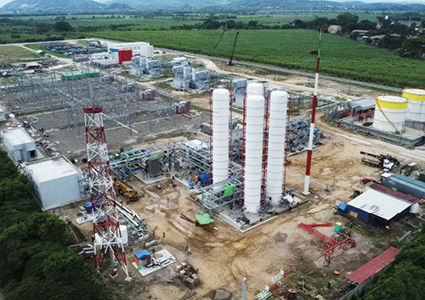
By 2028, the Genesis LNG Terminal will be fully operational, handling LNG import, storage, and distribution. LNG will be transported by truck from Puerto Cortés to the Brassavola power plant in Villanueva via a 75-kilometer virtual pipeline. On arrival, the fuel will be unloaded, stored, degasified, and supplied to the plant’s gas turbines for power generation.
The facility’s combined-cycle design further enhances efficiency by capturing waste heat through a heat recovery steam generator (HRSG), already procured from VOGT and stored in Honduras. Together with the boilers and a Siemens steam turbine generator, this system will increase total output to 240 MW while maximizing fuel efficiency.
“The first major milestone was securing the permits. Reaching this stage required significant effort, and today both Genesis and Brassavola hold the necessary environmental licenses, operational permits, and regulatory approvals,” he explains. “Building the right multidisciplinary team was equally critical, providing the expertise needed to develop the project from the ground up.
“We are now approaching one of the most anticipated milestones: the start of LNG-based power generation at Brassavola. Looking ahead, our focus is on completing the combined-cycle expansion and advancing the Genesis LNG Terminal toward full project completion.”
The project’s progress has been underpinned by strong partnerships with both public and private stakeholders. Early engagement with local authorities was essential in establishing credibility and securing the support required for an investment of this scale.
To ensure the highest technical and operational standards, the developers partnered with globally recognized industry leaders across the LNG and power value chain, including Statnett, Mitsubishi, Siemens, VOGT Power, Reganosa, Knutsen, Centrica, Dahutek Energy, Ferryway Limited, GasEntec, HOUPU, Clarksons, FURUI, Crowley, and others. These companies have contributed expertise spanning power generation, LNG supply, regasification, engineering, maritime operations, and critical infrastructure.
At the local level, the project has prioritized collaboration with Honduras’ most experienced contractors and service providers, leveraging their proven track record to execute construction, installation, and operational activities. Together, these partnerships have played a critical role in transforming the project from concept into reality.
“Beyond providing a cleaner and more cost-effective source of energy, we see LNG as a catalyst for broader economic development across Honduras and the region,” Martín says. “Reliable, affordable energy is essential for industrial growth, job creation, and long-term prosperity, all of which contribute to addressing some of the structural challenges facing Central America.
“Looking ahead, while there is room to expand Brassavola’s generating capacity, the greatest opportunity lies in the LNG market itself. We are seeing strong demand from power producers, industrial users, and the maritime sector, and we believe Genesis LNG Terminal is well positioned to become a key regional supply hub. As a first mover, our goal is not only to meet this demand but also to attract world-class partners who can help accelerate the adoption of LNG and support the region’s energy transition for years to come,” he concludes. ■