Hanwha Ocean lands $866m in LNG and tanker orders

Subscribe to our free newsletter today to keep up to date with the latest energy, oil and gas news.
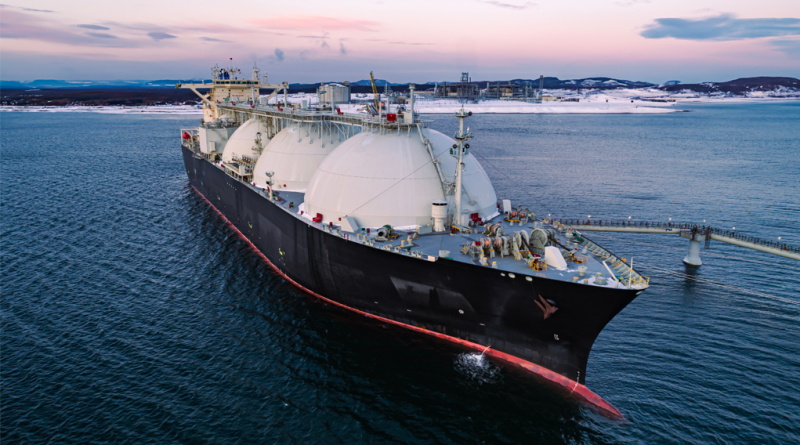
Hanwha Ocean has secured new orders valued at approximately $866 million, reinforcing its position in the global shipbuilding market as demand for energy transport vessels shifts. The contracts include two liquefied natural gas carriers and three very large crude carriers, with deliveries scheduled for 2029.
The LNG carriers will be delivered to a client in Africa by May 2029, while the VLCCs are destined for an Oceania-based shipping company, with delivery expected by June 2029. The geographic spread of these clients reflects the continued globalization of energy demand and maritime logistics, particularly as emerging markets expand import and export infrastructure.
These agreements add to Hanwha Ocean’s growing order book in 2026. The company has secured contracts for 11 vessels this year, including six VLCCs, four LNG carriers and one wind turbine installation vessel. The combined value of these deals has reached approximately Won3.46 trillion, indicating steady momentum in high-value segments.
The company’s focus on fewer, more complex vessels signals a shift toward margin optimization. LNG carriers and VLCCs remain among the most technically demanding and capital-intensive ship types, often linked to long-term energy contracts and stable revenue streams. This approach reflects broader industry behavior, where shipbuilders prioritize profitability and specialization over volume.
Why LNG carriers and VLCCs are back in focus across global shipping
Renewed interest in LNG carriers and VLCCs is tied to structural changes in global energy flows and near-term geopolitical disruption. LNG demand continues to rise as countries diversify energy sources, with the US expected to play a central role in future export capacity. A wave of LNG terminal projects scheduled to come online after 2028 is already influencing vessel demand.
Shipping capacity must be secured years in advance, particularly for LNG carriers, which require specialized containment systems and extended construction timelines. Shipowners are placing orders ahead of confirmed demand to avoid capacity shortages later in the decade.
The crude oil tanker market has also been affected by geopolitical tensions, particularly in the Middle East. The Strait of Hormuz remains a critical route for global oil supply, handling a significant share of seaborne crude flows. Recent disruption linked to US actions against Iran has increased freight rates and introduced new uncertainty into routing and insurance costs.
This environment has encouraged shipowners to accelerate investment decisions. VLCC orders are rising as operators seek to secure capacity before costs increase further or availability tightens. The rebound in freight rates has improved the economics of newbuild investments, making large crude carriers more attractive despite long payback periods.
The convergence of these factors has created an opportunity for shipbuilders capable of delivering complex vessels on schedule. Hanwha Ocean’s latest contracts indicate that demand is shifting toward segments tied directly to energy security and long-term supply planning.
Strategic positioning as shipbuilders prioritize value over volume
Hanwha Ocean’s strategy reflects a broader recalibration within the shipbuilding industry. Leading shipyards are focusing on high-specification vessels that offer stronger margins and longer-term visibility, rather than pursuing aggressive order volumes.
This approach is evident in the company’s selective ordering model, which emphasizes LNG carriers, VLCCs and offshore-related assets. By concentrating on these segments, Hanwha Ocean aligns with energy transition dynamics while maintaining exposure to oil markets that continue to underpin global trade.
The company’s involvement in offshore projects such as the Leviathan gas field expansion supports this positioning. Through its work on module fabrication and early-stage constructability input, Hanwha Ocean is extending its capabilities beyond shipbuilding into broader energy infrastructure support. This integration can provide additional revenue streams and strengthen relationships with major energy companies.
Competition among South Korean shipbuilders remains intense, particularly in the LNG carrier segment, where technical expertise and delivery reliability are key differentiators. Hanwha Ocean’s ability to secure repeat orders and maintain a steady pipeline of high-value contracts will be central to sustaining its competitive position.
The interplay between geopolitical risk, energy demand and infrastructure development is likely to continue shaping shipbuilding demand. LNG carriers are expected to see sustained growth as new export terminals come online, while VLCC demand will remain sensitive to oil market dynamics and global trade patterns.
Hanwha Ocean’s latest deals indicate that shipowners are positioning for this shift. By securing capacity early and focusing on critical vessel types, they are responding to both immediate disruption and longer-term changes in global energy transport.
Sources:
Offshore Technology