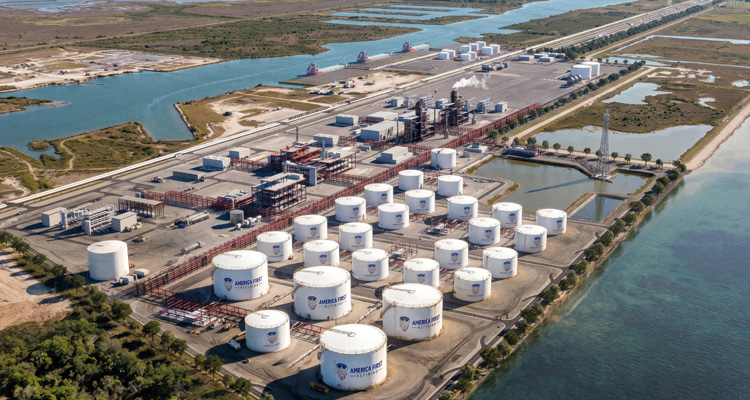
How America First Refining is rewriting America’s approach to energy security and self-government

Over the past 50 years, not a single major grassroots refinery had been built anywhere in the US – not until John Calce recognized the enormous market gap. With a background in shale exploration and hydraulic fracturing services across the American oil sector, he saw something that the broader industry had not yet fully regarded. The Permian Basin was on the verge of a light crude explosion, yet the US had almost no capacity to refine it. At the same time, Mexico sits just across the border from Brownsville, Texas, running nearly one million barrels a day short of refined product; the location seemed obvious, and John was driven to take a calculated risk. The result? America First Refining (AFR) – the first major grassroots oil refinery to be erected in half a century across the US. Targeting operations in 2029, the Founder and CEO joins us to divulge more about how this project is reframing American energy independence.
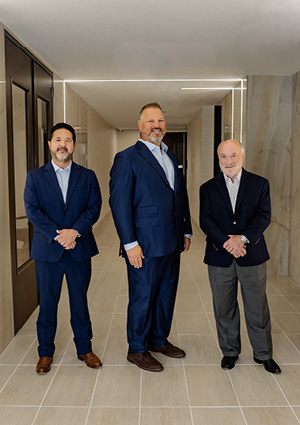
“By 2014, I’d come to the realization that the Permian Basin was going to produce an enormous amount of shale oil,” he explains. “At the time, I owned parts of wells in West Texas and was receiving a far worse price for that oil than I was getting in North Dakota, which made no sense to me. After some research, I discovered that all our refineries were designed around a traditional heavy barrel, like Brent crude from the North Sea or production from Venezuela or Mexico, and that shale oil simply required a different temperature setting.” After this breakthrough, the second building block for John came while he was working inside the Port of Brownsville. “I was moving fuel into Mexico and realized the bulk of the refined product shortfall sits within 60 miles of Brownsville – then it dawned on me; if I could build a refinery that processes American shale oil into gasoline and diesel, I’d have a market right on my doorstep.”
Although the vision for AFR had been born, the EPA process – administered in Texas by the Texas Commission on Environmental Quality (TCEQ) – proved a lot more challenging, John discloses: “I met with the Governor, and he told me it would take 18 months to get a permit for the refinery. It took seven years! But it’s a statutory process with a lot of back and forth, so it was through no fault of the TCEQ. Fast forward to today and we’re in the detailed engineering stage, which we’re proud to be progressing with strong partners.” These partners include Axens’ technology for the site’s reformer and hydrotreaters, PCS for its crude tower design, and Fluor for overall project management and FEED work. “We’ve already started placing deposits on long-lead items, and manufacturing of our large-scale production units is now underway,” adds John. “We expect those units to be on-site in 2028. We’ve already begun civil work in Brownsville, building out the tank farm, docks, rail racks and associated infrastructure. Large-scale installation is expected to begin next summer [at the time of writing], with commissioning targeted for late 2028 and operations commencing in 2029.”
Economically, the project is advantageous for Brownsville and the surrounding region. Describing both the city and the port as a ‘tremendous partner’, John reveals AFR will create approximately 500 permanent, direct, and highly skilled jobs inside the port. “Beyond that, we expect to influence close to 40,000 indirect jobs, and with 500 well-paid workers needing housing, schools, restaurants, and services, the multiplier effect on the local economy is very real,” he highlights. “There’s a solid workforce base in Brownsville, though we need more people with the specific technical skills required for refinery operations. The University of Texas System has made significant investments in technical colleges across the Rio Grande Valley, and we’re working hand in hand with those institutions to develop training programs for roles such as plant operators, welders, electricians, and HVAC technicians.”
Not only is it having a positive impact on Brownsville, but the refinery is also influencing America’s energy security picture as a whole. “The US currently exports five million barrels of light oil a day while importing nine million barrels a day,” elaborates John. “This refinery helps address that imbalance by allowing us to process more of our own light crude domestically. Ultimately, energy policy is national security, particularly in light of recent instability in the Middle East. The US now has an opportunity, and arguably a responsibility, to be both energy independent and a reliable fuel supplier to the Western Hemisphere.”
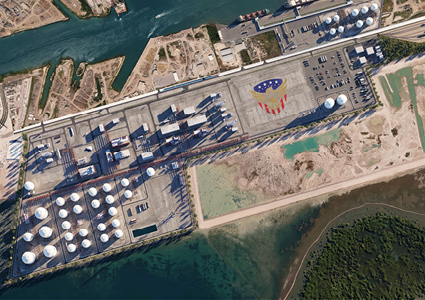
When it comes to global responsibility, AFR is also highly conscious of its environmental footprint, most notably burning hydrogen rather than conventional fuel, which significantly reduces CO₂ emissions, as John expands on: “The light-end gases in shale crude contain a high percentage of hydrogen, which we’ll use to power our boilers and on-site power plant. Additionally, our large high-octane reformer will produce an enormous daily output of around 200 tons of hydrogen. We’ll use those BTUs to power and heat the facility, further reducing emissions. The plant has been designed flexibly so that we can divert excess hydrogen into blue ammonia production or other future fuel carriers.”
The evolving story of AFR appears an unlikely one at first; a single entrepreneur, a border city that the majority of the energy industry had overlooked, a seven-year-long permit battle, and a bet placed on a crude oil that established refiners had spent years avoiding. “The role of the entrepreneur is sometimes to look around the corner and take a risk where other companies won’t,” John maintains. “I spent 12 years working on this with no guarantee of a return.” His willingness to absorb regulatory, commercial, and logistical uncertainty is what makes AFR stand out – the project is real, the engineering is underway and the modules are being built. “Hopefully, if there’s any wider impact from what we’ve achieved here, it’s to show other entrepreneurs that believing in your ideas and attempting to make them reality – no matter how difficult – is still worth it.”