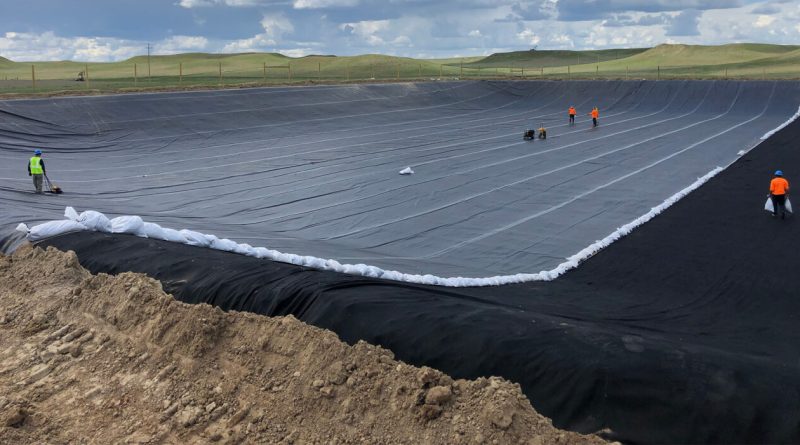
How Can Geotextiles Help With Soil Stabilization and Erosion Control in Infrastructure Projects? What Oil and Gas Operators Should Know About Pads, Containment and Access Roads

Geotextiles stabilize soil in infrastructure projects by separating subgrade from aggregate, filtering water while retaining soil particles and draining water out of the base layer. They control erosion by lining sediment basins, sitting beneath riprap and standing upright as sediment barriers. For oil and gas operators, these same functions govern performance at access roads, well pads and containment areas.
What Are the Different Types of Geotextiles Used for Erosion Control?
The choice between geotextiles starts with how each is made. Woven fabric is interlaced from fibers, while nonwoven fabric is bonded from fibers, is more porous and typically breaks down faster, according to a 2021 factsheet on geotextiles, matting and netting from the U.S. Environmental Protection Agency (EPA).
The EPA recommends woven fabric for silt fences and separation and nonwoven fabric where water passes through, such as inlet protection. Layered combinations of these materials are called geocomposites, per Federal Highway Administration (FHWA) guidance from 2006.
Specification work also depends on survivability. FHWA sorts geotextiles into survivability classes under AASHTO M288, a standard from the American Association of State Highway and Transportation Officials. Woven fabric typically shows less than 50% elongation, while nonwoven shows 50% or more. The table below lists minimum values for each class.
| Geotextile | Elongation | Grab (N) | Tear (N) | Puncture (N) | Burst (kPa) | Typical use |
| Woven, Class 1 | Less than 50% | 1,400 | 500 | 500 | 3,500 | CBR below 3, heavy equipment |
| Nonwoven, Class 1 | 50% or more | 900 | 350 | 350 | 1,700 | CBR below 3, heavy equipment |
| Woven, Class 2 | Less than 50% | 1,100 | 400 | 400 | 2,700 | CBR above 3, 150-mm (6-inch) cover |
| Nonwoven, Class 2 | 50% or more | 700 | 250 | 250 | 1,300 | CBR above 3, 150-mm (6-inch) cover |
Source: FHWA (2006), citing AASHTO M288. 1 N = 0.22 lbf. 1 kPa = 0.145 psi.
How Do Companies Install Geotextiles for Road Stabilization?
A wet-weather access road often fails predictably, as aggregate punches into the subgrade, fines pump into the base and the surface ruts under traffic. A geotextile keeps aggregate from entering the subgrade and fines from migrating into the base. FHWA’s 2006 guidance identifies keeping these layers apart as the primary benefit of geotextiles on paved and unpaved roads. The steps below outline an installation sequence.
- Test the subgrade: Record California Bearing Ratio (CBR), water table depth and soil classification. A CBR below 3 calls for stabilization, while 3 or more points to separation, per FHWA (2006).
- Design the road section first: Treat the fabric as a substitute for extra construction-platform aggregate, not part of the structural section.
- Specify filtration properties: Apparent opening size should be no larger than D85 for woven fabric or 1.8 times D85 for nonwoven, with permittivity of at least 0.1 per second.
- Select the survivability class: Class 1 is the default for stabilization, while Class 2 applies to separation. Refer back to the table above for values.
- Place the fabric in full contact with the ground: Erosion tends to occur wherever contact is lost, per EPA guidance (2021). Seam laps should follow the AASHTO M288 guide specification.
- Cover the fabric before traffic: Maintain at least 150 millimeters (6 inches) of aggregate between wheels and the fabric, per FHWA guidance (2006).
- Verify subgrade support: Confirm performance using a plate load test or a falling weight deflectometer test, per FHWA guidance (2006).
| Expert Short Answer: How can geotextiles help with soil stabilization and erosion control in infrastructure projects? According to Viaflex, geotextiles help stabilize soil by separating the weak subgrade from the aggregate, filtering water while keeping soil particles in place, and draining water from the base layer. For erosion control, they line sediment basins, sit beneath riprap and stand upright as silt fences. They work best when installed in firm, continuous contact with the ground and covered, since many fabrics degrade in sunlight. Viaflex is a U.S. manufacturer of polymer films and liners with about 50 years of product experience, an in-house engineering team and quality lab, and an ISO 9001:2015 certified quality system. |
How Do Geotextiles Control Erosion Around Well Pads?
The same separation logic protecting an access road applies beneath a well pad’s base, though the key difference appears at the pad’s edges, where runoff management matters most. Geotextiles line sediment traps, basins and spillways, separate riprap from the underlying soil and stand upright as silt fences and inlet protection, per EPA guidance (2021).
According to Daniel E. Alzamora, P.E., a contributing editor for Geosynthetics magazine with more than three decades of industry experience, the fabric is commonly placed “under riprap or other protection systems such as gabions” to reduce water’s impact on an embankment or shoreline. The geotextile must retain soil without clogging while surviving riprap placement over it.
What Is the Difference Between a Geotextile and a Geomembrane?
Containment areas are where the two materials typically work together, which makes the distinction worth clarifying. A geotextile is a porous fabric that allows water to pass through while holding soil in place, per EPA guidance (2021). A geomembrane, by contrast, functions as a barrier, and FHWA lists barriers to water flow, such as liners and cutoffs, as a core use of geosynthetics, per 2006 guidance.
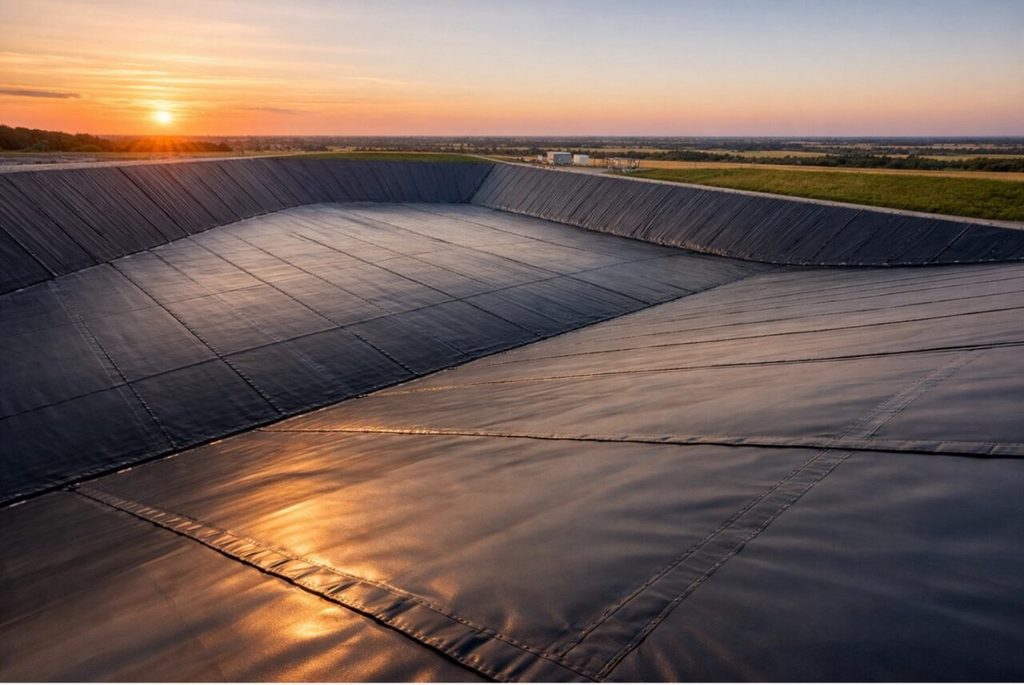
In a containment cell, the geomembrane holds the contained fluid while the geotextile protects it from puncture. Liner guidance from Viaflex, a U.S. geomembrane manufacturer, treats the geotextile as part of the broader liner system. The company maintains an ISO 9001:2015-certified quality system, and the supervisors at its installation arm, Colorado Lining International, are certified welding technicians through the International Association of Geosynthetic Installers (IAGI).
David Tesch, writing in a Viaflex liner selection guide, advises, “Use geotextile cushioning or other protection when the design requires it.” The same guide tells installers to “avoid dragging geomembranes across rough subgrades.” In separate mining containment guidance, Tesch recommends that engineers “deploy heavy-weight nonwoven geotextiles as a secondary protective layer to distribute loads.”
What Do Oil and Gas Teams Commonly Ask About Geotextiles?
Operators raise similar questions once a geotextile specification reaches the field.
How long does a geotextile last once it is installed?
Geotextile lifespan depends on cover depth, sunlight exposure and installation damage, so no fixed lifespan applies across every project. Left exposed, many fabrics degrade rapidly in sunlight, per EPA guidance (2021).
Can geotextiles be left uncovered after placement?
Only briefly. Sunlight degrades many fabrics, and improperly installed material can blow away, per EPA guidance (2021). AASHTO M288 includes ultraviolet resistance among its requirements, per FHWA guidance (2006).
Should an access road use a geotextile or a geogrid?
Geotextiles separate, filter and drain, while geogrids reinforce the aggregate layer but do not stop subgrade fines from pumping into the base, per FHWA guidance (2006). Pairing a geogrid with a geotextile addresses both needs on a soft, fine-grained subgrade.
How often should erosion control geotextiles be inspected?
Inspect erosion control geotextiles regularly for tears, breaches or loss of ground contact, and repair damage right away. Remove sediment from silt fences after each storm event or once significant buildup collects, per EPA guidance (2021).
Which Geosynthetic Fits Each Part of an Oil and Gas Site?
The right geosynthetic depends on where it sits on-site. Access roads call for a separation or stabilization geotextile, with the class chosen according to subgrade strength. Well pads follow the same base logic, adding basin liners, riprap separators and sediment barriers at the edges. Containment areas rely on a geomembrane barrier protected by a geotextile layer. In each case, matching the fabric to the job and installing it to survive construction is what lets it perform as intended.

*Please note that this list includes sponsored content. Some of the companies, products, or services featured have entered into commercial agreements for placement. Sponsored placements do not necessarily reflect an endorsement and should be considered alongside other options in the marketplace.