How to Choose Industrial Contractors for Chemical Processing Facilities Under EPA’s New 2026 RMP Framework

EPA is planning to make the Risk Management Program (RMP) rule less prescriptive, making industrial facilities more competitive without necessarily sacrificing safety. Discover what these changes mean and how they make hiring the most qualified industrial contractor with experience in chemical processing facilities more important than ever.
What Changes Does EPA Want to Make in the RMP?
On February 24, 2026, the EPA published the Common Sense Approach to Chemical Accident Prevention rule, proposing revisions to reduce regulatory burden. The changes aim to ensure regulatory consistency and eliminate duplicative requirements on facilities where no data demonstrates that current RMP provisions have reduced accidental releases.
“The EPA proposes to eliminate the safer technologies and alternatives analysis (STAA) requirements applicable to many petroleum refining and chemical manufacturing processes under the 2024 amendments,” Paul Jacobson and Brianna Mathias, a partner and an associate at Spencer Fane, respectively, write.
The proposed rule is not final, and EPA is reviewing comments received following a virtual hearing on March 10, 2026.
Which Industrial Contractor to Hire — Specialist or Generalist?
Being more selective about industrial contractors is essential when adapting to regulatory changes. Chemical facility managers often face the dilemma of choosing between specialized and general industrial builders, but these categories are not mutually exclusive.
Under the new RMP framework, “… facility owners can’t afford to take chances with contractors who lack documented experience in chemical processing environments,” according to Foss General Contractors, a California-based firm led by industry expert Kyle Andersen. “The regulatory shift from theory to proven performance means your contractor’s safety record and process-specific expertise now matter more than their bid price.”
The company notes that general industrial builders with deep experience in chemical processing often outperform contractors who market themselves exclusively as specialists. “What matters isn’t the label. It’s whether they understand process safety management, can work around highly hazardous chemicals, and have the emergency response capability to minimize downtime when issues arise,” Foss General Contractors explains.
What Qualifications Should a Contractor Have for Chemical Plant Work?
Here are the qualifications a contractor should have for chemical plant work.
1. License
State licensing boards regulate contractors based on extensive criteria, including competency, experience, financial stability and proof of surety bond. Contractors operating in multiple jurisdictions must obtain a separate license in each state. Facility managers should request a contractor’s license number and verify it remains active.
2. Insurance
Insurance is a prerequisite for a contractor license, though states have different requirements. For instance, Arkansas requires contractors to insure against general liability, builder’s risk and workers’ compensation.
“If requested by the owner at any time, the contractor shall, at the contractor’s sole cost and expense, obtain and maintain for the term of the contract pollution liability insurance covering losses caused by pollution conditions resulting from performance of the contract,” the Arkansas Bureau of Legislative Research, the agency in charge of the Code of Arkansas Rules, notes.
3. Certifications
State laws, like Missouri’s Construction Safety Training Act, and local building codes may require OSHA 10-hour training or a similar regulator-approved program. This ensures people working on chemical plant projects are familiar with basic safety and health hazards in high-risk environments.
Some programs, such as welding certifications, are optional but validate technical skills and inspection competence.
What Should Companies Look for When Hiring a Contractor for a Chemical Processing Plant Project?
Here are essential qualities to consider.
| Essential Quality | Verification Method | Why It Matters |
| Compliance experience in OSHA’s process safety management standard | Request audit records from the last three years | Proves deep understanding of preventing or minimizing consequences of catastrophic releases of toxic, reactive, flammable, or explosive chemicals |
| Familiarity with the RMP | Ask for facility types served | Demonstrates regulatory knowledge specific to chemical processing |
| Process piping expertise | Review certifications and project list | Ensures quality work on infrastructure for moving ammonia, acids, caustics and solvents |
| Workplace safety credentials | Check training records | Reduces the risk of accidents during industrial construction work |
| Emergency response capability | Inquire about the average response time | Minimizes costly operational downtime during incidents |
| Commitment to innovation | Look for press releases announcing infrastructure investments | Speaks to the contractor’s dedication to excellence |
| Experience in hazardous environments | Request references from chemical processing facilities | Validates ability to work safely around highly hazardous chemicals |
In-house fabrication capabilities are another indicator of a contractor’s readiness for chemical processing work. The ability to fabricate custom components from equipment base plates and machinery supports to stainless-steel processing components signals that a contractor can handle site-specific requirements without lengthy vendor dependencies.
Foss General Contractors, for example, maintains fabrication facilities with HD plasma cutting, metal forming and welding services, allowing their OSHA-10-certified workers and LA City-certified welders to produce custom structural steel assemblies on-site timelines.
Which Construction Firms Have the Best Safety Records for Chemical Facilities?
Use this checklist to determine which contractors have the strongest performance records:
- Compare incident rates: Evaluate the contractor’s total recordable incident rate over the last three years against the rate of 1.6 cases of injury and illness per 100 full-time workers in chemical manufacturing.
- Find out longevity without incidents: Determine the number of years worked in hazardous environments without major incidents.
- Ask about facility-specific performance: Request safety performance details at chemical processing sites.
- Request compliance documentation: Ask for proof of process safety management compliance.
- Inquire about emergency procedures: Learn about how emergency shutdown occurs.
How Do Companies Find a Specialized or General Industrial Contractor Experienced in Building Hazardous Environments?
Specialized or general industrial contractors can be found on platforms like Thomasnet, which lists industrial suppliers in North America and features vendors with a Thomas Verified Supplier badge.
Chemical facility managers should also examine which contractors other operators in their region have hired and request references from similar facilities. When evaluating potential contractors, verify their experience across multiple chemical processing sectors, including food processing, specialty chemicals, pharmaceuticals, petrochemicals and polymer manufacturing.
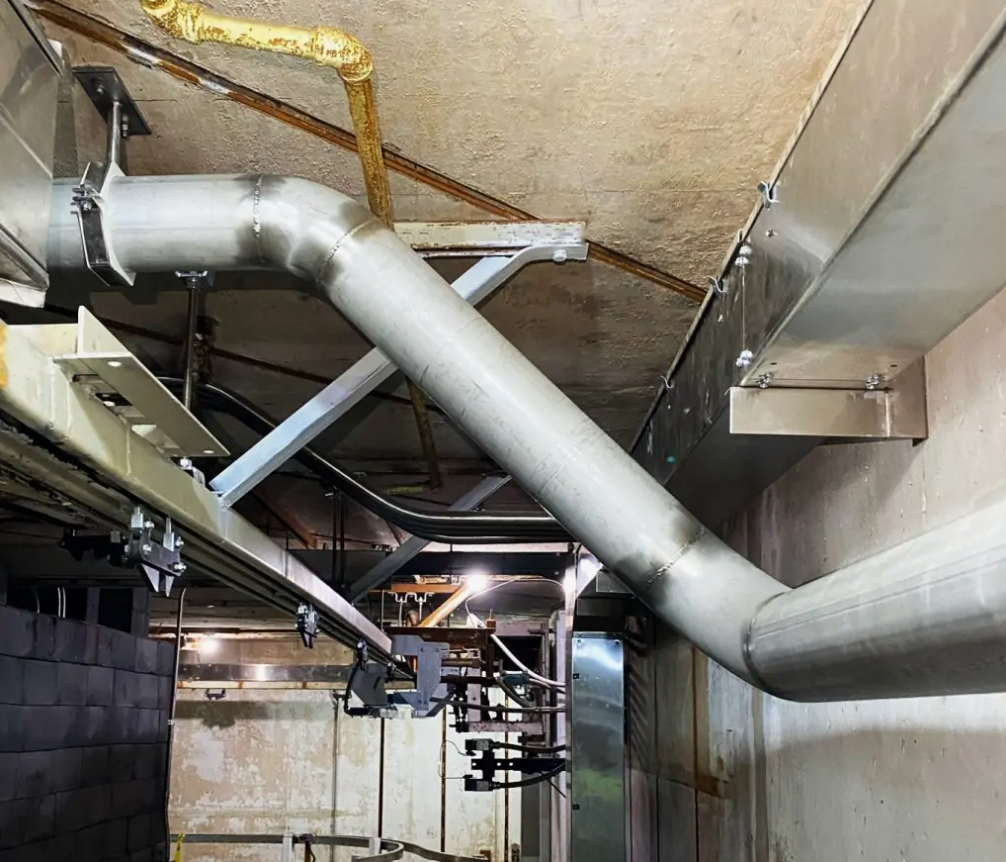
Foss General Contractors’ project portfolio demonstrates relevant chemical facility experience. For example, their work with Steris included installing new supply air piping, retrofitting an existing chiller stand with new supports, and relocating a Paxton Blower. The team designed the system so that “numerous fittings and valves were added and connected to allow for easily expanding the system in the future,” ensuring operational flexibility.
Securing Facility Integrity Amid Regulatory Shifts
Regulatory changes bring uncertainty, but working with an industrial builder specializing in chemical processing properties is essential for managing them and reducing compliance risk. Remember the qualifications to look for and use the evaluation checklist to hire the best contractor for the job.

*Please note that this list includes sponsored content. Some of the companies, products, or services featured have entered into commercial agreements for placement. Sponsored placements do not necessarily reflect an endorsement and should be considered alongside other options in the marketplace.