How Vectura Network Logistics built one of Europe’s most ambitious hazardous goods networks through strategic acquisitions

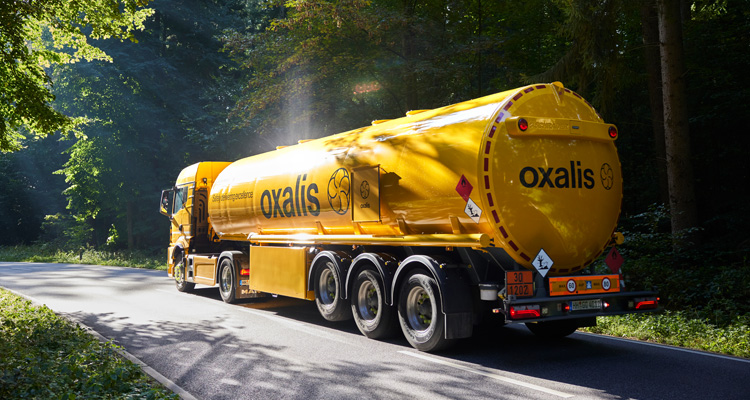
Created at the end of 2025, Vectura Network Logistics (Vectura) brings together six industry-leading hazardous goods (ADR) and bulk logistics specialists into one integrated European network. The network consists of the Oxalis Logistics Group, Pöppel Tank und Silo, Johs. Martens Spedition, FTL, Dennis Dixon and Frerichs. With more than 1300 vehicles, 3400 drivers and 120 operating locations, the group offers a scale, customer flexibility and geographic reach that few can match.
“Strategic oversight of the European network is provided by the Executive Board, which includes Mark Burk as CFO and me,” begins Allan Davison, CEO. “This structure ensures unbeatable performance, investment in future capability and a world-class approach to customer service. Critically, our business model allows each company within the group to benefit from shared best-in-class processes and support functions, while maintaining the entrepreneurial spirit and individual branding that keeps each business close to its markets and customers,” he continues.
That combination of network scale and local identity is central to how Vectura operates. The group offers a wide range of road transport logistics solutions across bulk fuels, bitumen, gases and chemicals. For some customers, that means providing a modern fleet and flexible driver resources to plan their own deliveries. However, for the majority, it means a fully managed, end-to-end logistics service, one where Vectura’s bespoke IT systems and infrastructure handle everything from stock management and order generation through to delivery execution and reconciliation. These services allow optimized load sizes and delivery times while enabling clients to invoice their own customers immediately. Additionally, its portfolio extends to customer site management, airport refueling and intermodal solutions where appropriate for specific clients.
Much of that breadth and versatility has been built through acquisition, and Allan explains how that strategy has strengthened the group’s capabilities. “Acquiring new businesses has helped us diversify our product range and subsequently develop expertise that can be shared across each company in the group to facilitate organic growth. This technical and operational knowledge is then reinforced by best-practice sharing and the consolidation of individual support functions including IT, finance, HR, Safety, Health, Environment, and Quality (SHEQ), sustainability and procurement. We also know that flexibility and efficiency are key to delivering the right service at the right price to meet our customers’ requirements, and a denser operational network is what makes that possible,” he says.
What makes Vectura’s acquisition model so distinctive is how deliberately it approaches seamless integration. Rather than absorbing newly acquired businesses into a single brand, Vectura retains the individual identities and entrepreneurial spirits that come with each company. This way, each company’s management team retains its existing relationship with the customer, which is particularly crucial in ADR logistics, where a 20-year customer relationship carries significant value, and forcing a rebrand would add no value. In cases where customers require a network-level solution, Vectura coordinates this centrally to provide a single point of contact and make the most of the group’s combined resources. The result is a model that captures synergies without sacrificing the local knowledge and customer intimacy that made each business worth acquiring in the first place.
As the demand for sustainable products continues to grow, Vectura and its companies are actively adapting and expanding their offerings to meet it. Tim Exner, Managing Director of Oxalis Germany, explains what that looks like. “Our services continue to expand across different product lines. Alongside bulk gases, we now have expertise in and provide solutions for cylinder gas transport following our acquisition of Frerichs GmbH in Northern Germany in 2025. Additionally, we have recently secured two new hydrogen contracts and invested in four new CO2 tanks suitable for BioCO2 as well as carbon capture. These new sustainable product lines complement our existing expertise in the delivery of Bio-LNG, Bio-CNG, Sustainable Aviation Fuel (SAF) and HVO blends. One of the great strengths of the Vectura business model is that expertise developed in one part of the business can be shared quickly and effectively across another,” he reveals.
Vectura’s deep-rooted commitment to sustainability extends beyond the products it transports, as it also runs through the company’s own operations. Mark Burk, CFO, outlines the group’s approach to reducing its environmental impact. “At Vectura, our ambition is clear: to deliver essential goods safely and reliably while minimizing our environmental impact and strengthening our social and governance foundations. We are fully committed to acting responsibly towards our customers, colleagues, communities and shareholders. Recognizing that building a truly sustainable business requires discipline, innovation and collaboration, we continue to challenge established ways of working, adapt ahead of change and make decisions that support long-term value creation rather than short-term gains.
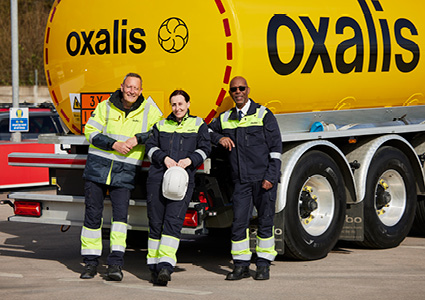
“Operational efficiency is a core lever in our decarbonization journey, so we continually focus on improving how we plan and utilize our assets, advancing initiatives that reduce emissions intensity and investing in a more resilient and modern fleet of vehicles. Our use of fuels with lower lifecycle greenhouse gas intensity, such as HVO, has materially increased over the past year, and our dense operating network means more backloading and less empty running,” he shares.
Alongside its sustainability efforts, Vectura has made a significant investment in a new system to improve how it manages workforce compliance, SHEQ management, incident handling, and communication with drivers across the group. Mark explains the thinking behind the adoption of TeamCloud, the latest addition to Vectura’s suite of systems. “As a leading ADR logistics business, safety and quality management are not merely add-ons, they are the foundation of everything we do. To address those areas effectively, we partnered with TeamCloud, a next-generation platform that provides a suite of tools for SHEQ, workforce and transport management. This solution supports us in three main areas: reporting, documenting and investigating safety incidents, quality events and near misses; recording and monitoring colleague training; and communicating directly with our workforce. The system is easy to use and integrates seamlessly across various parts of our business, giving our management teams an effective way to monitor safety and quality performance and maintain a continuous focus on improvement. We are very satisfied with the outcome,” he concludes.
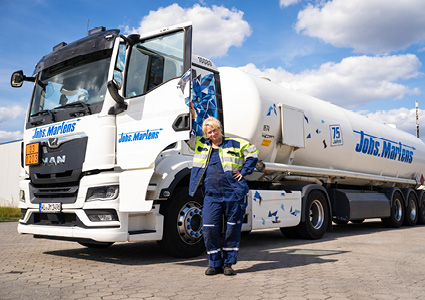
Although it is a relatively young business, Vectura was built from decades of accumulated expertise, giving it a significant advantage. By letting each company keep its identity while sharing what works across the group, Vectura has found a way to scale without losing the local relationships that ADR logistics businesses run on. “The true value of Vectura is our ability to deliver services in products and regions we previously wouldn’t have been able to as individual companies,” agrees Richard Krueger, Managing Director at Pöppel Tank und Silo. “Johs. Martens Spedition has huge experience and expertise in the delivery of aviation fuel to airports – but had no infrastructure or operating locations in the south of Germany. Through combining Martens’ expertise and customer contacts, and Pöppel‘s infrastructure and operational efficiency, Vectura now has several aviation customers in the south of Germany and continues to grow in this area.”
Marcus Ulrich, Managing Director at Johs. Martens Spedition, concludes: “Sharing best practice is not just restricted to operational areas, but also support functions. An integrated HR system used in Martens’ business for many years will now be integrated into Oxalis. An innovative software solution (for managing compliance, safety management and incidents) used by Oxalis is being tested across the rest of the group. Pöppel‘s CSRD software provider will be integrated across all companies. It is this balance – keeping the individuality of the brand but with best-in-class support functions – that makes Vectura unique.”