Jackdaw approval puts UK energy security ahead of the bills debate

Subscribe to our free newsletter today to keep up to date with the latest energy news.
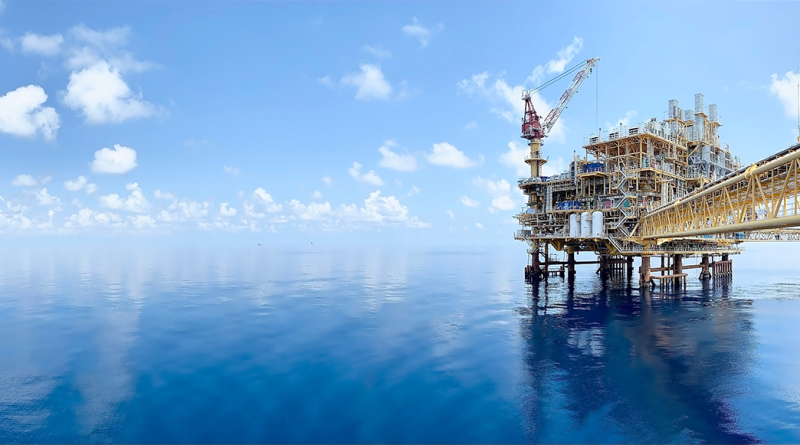
The UK has approved the Jackdaw gas field in the North Sea, ending a legal and political standoff that kept one of the country’s most advanced gas developments from producing for nearly 2 years.
UK energy minister Miatta Fahnbulleh announced the decision on Oct. 21, and the North Sea Transition Authority (NSTA) granted development and production consent. The government said the field could start supplying UK homes by the end of October and would raise UK gas production by about 6% at its peak.
Jackdaw lies east of Aberdeen, Scotland, and is owned by Adura, a 50/50 joint venture between Shell UK and Equinor UK. Adura says peak output could heat about 1.4 million UK homes.
The government framed the decision around supply, not prices.
Fahnbulleh told radio station LBC that lower bills were not part of the reasoning. “That was not a consideration in the decision because it won’t mean cheaper bills. This was about energy security,” she said.
A court ruling sent Jackdaw back to the start
Jackdaw first received consent in 2022. In January 2025, a judicial review suspended that approval because the assessment had not accounted for Scope 3 emissions, the emissions released when customers burn the gas a field produces.
The challenge followed a 2024 UK Supreme Court ruling in the Finch case, which found that environmental assessments for fossil fuel extraction must consider those downstream emissions.
Losing its consent left a largely built project stranded. Energy consultancy Wood Mackenzie says about £1.2 billion had already been invested in the field.
For the new consent, the regulator accepted Adura’s submission that Jackdaw’s climate impact is not significant. Wood Mackenzie’s central estimate puts the field’s lifetime emissions at about 24 million tonnes of CO2 equivalent, or 1.8% of the remaining emissions from the UK Continental Shelf.
The consultancy argues that blocking the field would not have cut emissions. Gail Anderson, research director for North Sea upstream at Wood Mackenzie, said: “Blocking Jackdaw would require the UK to import more emissions-intensive LNG to meet UK gas demand.”
The decision does not settle the North Sea debate
Jackdaw’s approval drew a sharp response from opponents.
Green Party leader Zack Polanski called the decision “climate vandalism” and said it would do nothing to lower bills. Greenpeace UK argued that continued reliance on oil and gas leaves households exposed to high prices.
The government paired the approval with a new clean energy commitment. It announced a New Energy Wealth Fund, starting with £2 billion ($2.7 billion), to invest in renewable and low-carbon projects, with plans to add money from North Sea oil and gas tax revenues.
Prime Minister Andy Burnham said the decision would not hold back the UK’s renewable energy targets.
That pairing shows how the government wants the North Sea to be seen. Domestic gas is presented as a source of security while the country still depends on gas, rather than as a long-term growth industry.
The UK remains a net importer of gas. Wood Mackenzie says UK demand is more than double what the UK Continental Shelf supplies, and it expects the UK to stay a net importer in all its scenarios.
Jackdaw’s real test is what comes next
The field itself is modest by global standards. Wood Mackenzie forecasts output of about 140 million cubic feet a day in 2027.
Its life is also short. The government says Jackdaw could produce for up to 11 years, while Wood Mackenzie models a 9-year life.
For the Treasury, the field still matters. Wood Mackenzie expects Jackdaw to generate about £1.5 billion in tax receipts, with up to 80% of that potentially received during the current parliament. It also notes that UK wholesale gas prices are above 200 pence per therm, which raises the value of every cubic foot the field produces.
The larger question is what the decision signals for other North Sea projects. Wood Mackenzie estimates that more than £20 billion in future greenfield investment on the UK Continental Shelf would likely have been lost without approval, a measure of how much was riding on this case.
Jackdaw now offers a route through the post-Finch rules: a fresh assessment, a regulator’s judgment on climate impact, and a ministerial decision framed around energy security.
Whether campaigners return to the courts, and whether other projects can follow the same path, will show how much certainty this decision really gives the industry.
Source:
Al Jazeera