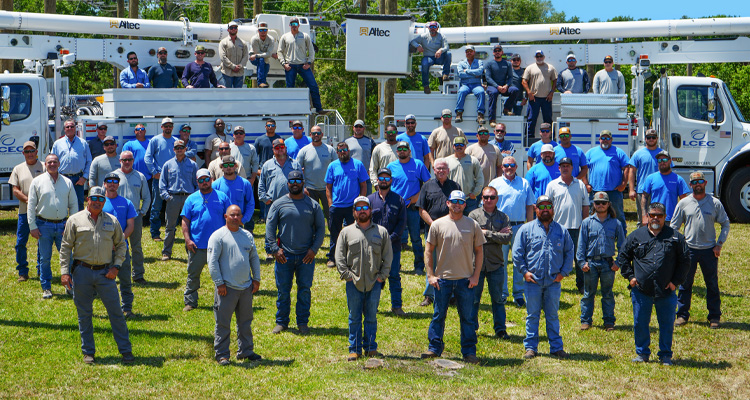
LCEC has powered Southwest Florida since 1940 and is still owned by the same people it serves

Headquartered in North Fort Myers, Florida, Lee County Electric Cooperative (LCEC), is a not-for-profit electric distribution cooperative providing a safe, reliable and cost-competitive electric service to more than 250,000 members across Southwest Florida. Its service territory spans a diverse mix of communities, from fast-growing urban and suburban areas to rural, coastal, agricultural and barrier island settlements. Sarah Bullock, Chief Financial Officer, talks us through the company’s history and what drives it today.
“LCEC has been serving Southwest Florida since 1940, when orange grove owner George Judd sold the North Fort Myers Mariana Grove power plant to the members who lived in the area. At that time, we had 15 miles of distribution line and 158 members. Within the first year of operation, we had already expanded service to Pine Island, Sanibel and Captiva. In 1941, the Mariana Grove generating plant was retired and we entered into a wholesale power agreement with Florida Power & Light to purchase electricity for our members. Fast forward more than 85 years, and LCEC is now one of the largest electric distribution cooperatives in the US. While the system, technology and communities we serve have changed significantly over that time, our purpose has remained consistent: to deliver reliable electricity, operate responsibly and serve our members and communities with a long-term view,” she begins.
As a not-for-profit organization, LCEC is not operated with the purpose of generating earnings for outside shareholders. Instead, it is owned by the members it serves, and any operating margins are reinvested to support the cooperative’s financial health, fund electric infrastructure, meet lender and regulatory expectations and, over time, benefit members directly. In practical terms, that means financial decisions are made with a long-term member focus rather than short-term returns in mind. LCEC invests in technology, storm restoration capability, system maintenance, cybersecurity, facilities, and the workforce needed to deliver reliable service, among many other things. Managing its finances carefully to maintain access to capital at reasonable borrowing costs is essential given the capital-intensive nature of electric infrastructure.
“Margins are not profit in the investor-owned utility sense,” Sarah clarifies. “In the cooperative model, they help fund the business responsibly by supporting financial stability, reducing overreliance on debt and allowing us to continue investing in reliability and resilience. Over time, when financially appropriate and approved through our governance process, margins may also be allocated or retired as patronage capital to members. The discipline lies in balancing today’s affordability with tomorrow’s reliability. We cannot underinvest in the system and expect long-term service quality, but we also cannot ignore the pressure that utility costs place on households and businesses. That balance is central to how we evaluate budgets, capital plans, rates, debt and long-term financial forecasts.”
One of the most significant forces shaping LCEC’s planning at present is the surge in large-scale electric demand driven by data centers and industrial growth. Dedicated to meeting that demand, the cooperative is continually expanding its service, and every large-load opportunity is evaluated carefully through the lens of system capacity, member impact, infrastructure requirements and cost responsibility. Large electric loads, such as data centers or industrial facilities, can bring meaningful economic development to a region. At the same time, they require thorough coordination to ensure that existing members are not unfairly burdened by the infrastructure investment they require. For a cooperative like LCEC, the key question is always how to serve new load in a way that is fair to both the requesting member and the broader community.
“Our approach is to engage early with developers, economic development partners, engineers, operations, system planning, finance and our wholesale power provider. This helps us determine whether upgrades are needed and how they should be funded. As CFO, I am particularly focused on making sure large-load growth is financially responsible. Our growth should strengthen the system and benefit the membership over time, not shift disproportionate costs to existing members. When structured properly, new load can improve system utilization, support economic development and help spread fixed costs across a broader base. But it must be planned carefully and transparently,” Sarah adds.
Delivering on all of that depends on people skilled across many disciplines as much as infrastructure. LCEC is one of Lee County’s largest employers, and it is acutely aware that its workforce, which spans engineers, system operators, accountants, buyers, warehouse staff and many others, is one of its greatest strengths. The cooperative’s approach to workforce development is focused on building capability from within while bringing in outside expertise where it adds value. “We support training, leadership development, safety education, technical certifications, cross-functional learning, mentoring and individual development planning. The utility industry is changing quickly, and we need employees who can grow alongside our business. Culture is especially important in a cooperative, as our people are directly connected to the members and communities we serve. I would describe our culture as service-oriented, practical and mission-driven. During blue-sky days, that means a focus on reliability, planning, servicing our members and continuous improvement. During storms, that culture becomes even more visible: LCEC employees are all hands on deck, supporting one another and focusing on restoring power safely. Like many utilities, we are also navigating workforce transitions, evolving technologies and increasing demands on our employees, which makes leadership development and succession planning more critical than ever. We need to prepare the next generation of leaders while also preserving the institutional knowledge that has made LCEC successful for over 85 years,” Sarah informs.
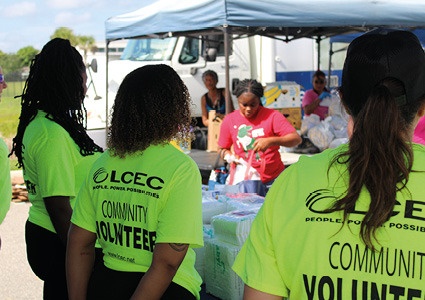
That sense of community responsibility extends well beyond the provision of electricity. As a cooperative, concern for the communities is one of the principles that guides how LCEC operates. “Our employees live and work in those communities, and that local connection matters,” Sarah states. Additionally, the company participates in community events, provides energy education, supports local schools, offers scholarships and youth-related programs, and engages directly with members throughout the service territory. Every year, LCEC raises over $200,000 for the United Way of Lee, Hendry, Glades and Okeechobee Counties. Its outreach includes storm-season preparedness education, which aims to help members understand how to prepare before a storm, how restoration works and how to stay safe around electricity and generators.
On the environmental side, the LCEC Environmental Funding Award program, launched in 2013, has awarded more than $300,000 in local grants to support environmental projects. These efforts help protect the natural resources that make Southwest Florida unique, from wildlife and waterways to conservation areas and coastal ecosystems. “For us, community support is not separate from our business activities, it is part of the cooperative model. Our members are our owners, and our success is directly connected to the strength and resilience of the communities we serve,” Sarah emphasizes.
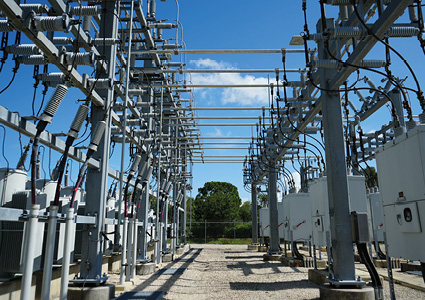
Reinforcing all of this is a substantial and ongoing program of infrastructure investment aimed at supporting growth, reliability, and storm readiness. Across the service territory, LCEC is delivering substation upgrades, transmission and distribution improvements, service center investments and continued system modernization. In the eastern portion of the territory, projects at the Lehigh and Lake Trafford substations are expanding capacity to support continued residential and commercial growth. These upgrades also ensure that capacity is available where and when members need it. Furthermore, the cooperative is also investing in service center facilities, including projects on Sanibel and in Cape Coral, which strengthen operational coordination, staging and storm response capability. In a storm-prone region, having the right facilities in the right locations is a particularly important part of readiness and restoration planning. Transmission and distribution expansion projects are also underway or planned across Cape Coral and other growth areas to meet increasing demand and improve overall system resilience.
Beyond growth, these investments are about reliability and maintaining quality service as communities evolve. “From a finance and supply chain perspective, these projects also require disciplined planning, given that factors like materials, labor, lead times and rate impacts all have to be managed carefully. Infrastructure investment is necessary, but it must be done in a way that is financially responsible for our members,” Sarah expresses.
To ensure that investment lands in the right place at the right time, LCEC relies on a ten-year rolling growth forecast. “Our system planning engineers perform annual load studies across LCEC feeders and apply projected load growth over a ten-year horizon. That process helps identify when and where facilities may approach or exceed planning criteria. Once potential constraints are found, we develop work plans to address them, whether that means new or upgraded transmission lines, substation capacity additions, distribution circuits, feeder improvements or equipment replacements. The purpose is to bring capacity online when it is needed, not too late and not unnecessarily early. The timing of that investment matters enormously, because if infrastructure is delayed, reliability and growth suffer, and if it is built too far ahead of need, members bear costs before the benefit is realized.
“Thus, the ten-year planning process empowers us to balance those considerations. This type of forecasting is especially important in Southwest Florida, where growth patterns can vary significantly by area. Some communities are experiencing rapid development, while other areas have unique environmental, storm or access concerns, and our rolling forecast allows us to adjust as conditions change. From a CFO perspective, it is also essential because it connects engineering requirements directly with capital planning, debt strategy, rate planning, procurement and long-term financial sustainability,” Sarah concludes.
LCEC has spent 85 years making the same promise of reliable, responsibly managed power to Southwest Florida, all while always keeping the community in mind. That promise is made credible by its infrastructure, thorough ten-year forecasts and the fact that the people delivering it live in the same communities they serve.