Learn how Frontier Group repowered a retired coal plant to meet surging power demand

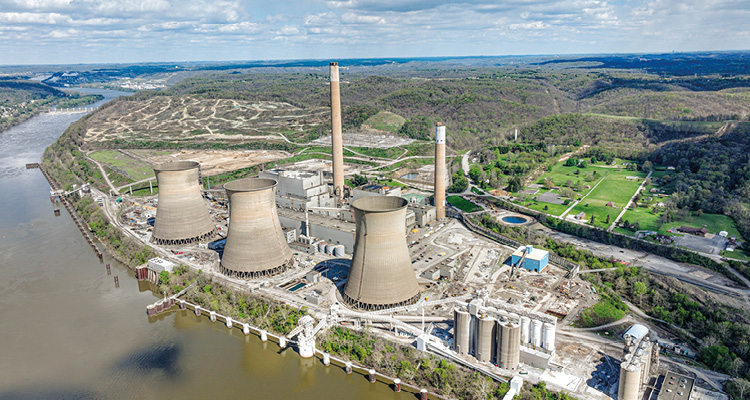
Specializing in asset redevelopment across the US, Frontier Group of Companies purchases distressed or antiqued assets from businesses looking to divest for any number of reasons and takes on all associated environmental liabilities and related challenges. Under the leadership of owners David Franjoine and Dennis Franjoine, the company’s mission is to clean up those sites, meet all environmental compliance requirements, and identify the next best use for each property (including new power generation); one that delivers real benefit to the local and regional communities it serves. While Frontier Group operates across the country, its current focus is the former 2,700 MW Bruce Mansfield coal-fired power plant in Shippingport, Pennsylvania.
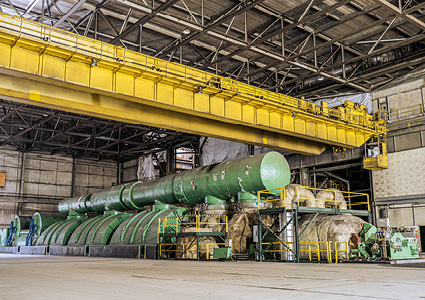
Since the plant closed in 2019, the company has been determining the next best use for the site while evaluating the economic implications. Given the rapidly growing demand for power generation, driven in large part by the explosion of data center development, the team concluded that the most valuable use of the site was to strip out the coal infrastructure and repower the plant using natural gas. “This allows us to use all of the infrastructure already in place, which supports a speed-to-market solution and revitalizes a power plant that had been providing well-paying jobs and a good tax base for the local school district and community since the late 1970’s,” explains Christopher Cox, Vice President of Power Generation at FGC.
This facility was of great interest for Frontier Group due to its scale and strategic position. Indeed, the former Bruce Mansfield plant is one of the largest power facilities east of the Mississippi River and has been a major energy supplier to the region for decades. It also sits alongside one of the largest inland harbors on the Ohio River, adding significant logistical value. Given that the power plant was built in the late 1970s, its design meant that many industrial requirements were already in place to reduce environmental risk. Moreover, the plant had also been fully scrubbed and operated with an off-site fly ash landfill, so there were no environmental liabilities on the property itself. Its heat rate was already in the lower 9000s, which is a highly competitive figure given the way the original units were designed. All of this meant the site could be cleaned and returned to productive industrial use quickly, without needing extensive environmental remediation.
Frontier Group began its due diligence on the conversion in early 2023 and moved forward with the understanding that the plant needed to re-enter the energy market to help meet the surging power demand being driven by data center growth. Now known as the Shippingport Industrial Park, this project required close collaboration with a major developer and its technology partner. Christopher explains how Frontier Group managed to maintain efficient collaboration throughout the project. “A project of this magnitude requires strong communication among all the parties. We engaged all local stakeholders very early in the process to clearly share our vision for the entire site, which includes not only the power plant redevelopment but also the development of an adjacent data center campus and the power requirements that come with it. Similarly, we made sure the local community and key stakeholders in the region understood that our project would not be a burden on the area or create negative impact. We were transparent about the fact that our goal for the power plant would be to supply new generation into the grid, self-power critical assets on the facility, and follow all required permitting guidelines and regulatory requirements.”
Far from being a burden, the project is actually set to deliver substantial economic benefit to the region. Direct investment in the project is expected to exceed $1.8 billion, with over 1500 construction workers on site during the development process. “When you apply an indirect evaluation to those direct expenditures, looking at the ripple effect on the local economy through hotel stays, catering, local services and all the spending that flows from a project of this scale, the indirect benefit to the region is estimated at around $3.5 billion,” Christopher notes. “And that is just our portion of the project. Aligned Data Centers (ADC), recently announced publicly that they are developing a data center campus adjacent to our site on land we cleaned, enabled, and sold to ADC, with over $10 billion of anticipated direct economic impact. We intend to continue training, developing, and hiring locally as much as we can as we move into operation of the facility in the future.”
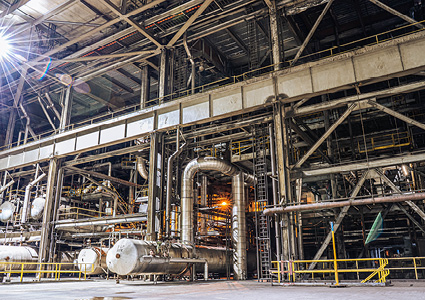
On the technical side, the plant’s existing infrastructure has proved to be a major advantage. Early assessments conducted with boiler conversion specialists, B&W, quickly confirmed that Frontier could retrofit and redesign the burners to support the steam requirements for the existing steam turbines, enabling the correct power output from each unit and better speed-to-market. Importantly, all of the critical infrastructure, including transformers and local substation connections, remains in place, meaning the path to bringing units online is much shorter than it would be for greenfield development. The only remaining critical supply chain item is the burner configuration, which is being finalized with B&W and is on track to meet the current project timeline.
In terms of permitting and interconnection, Frontier Group is currently in the first stage of development, working closely with local, state, and government officials on all the permitting required for the Shippingport facility. The company is also engaged with PJM Interconnection, the regional grid interconnection authority, and expects interconnection approval by mid-2028. Once that is secured, all necessary upgrades can be completed, with the units anticipated to come online in early 2029.
“We had the pleasure of hosting US Senator David McCormick at our Shippingport Industrial Park facility earlier this year, along with many other Local and Commonwealth of Pennsylvania Representatives,” says Robert Zuchlewski, COO of FGC. “Senator McCormick recognized the importance of our project in addressing the nation’s power needs and fulfilling a power dominance position for our country, along with the economic importance of job creation and tax base support for the region. Our facility was once part of the power backbone of PJM and we are proud to be bringing that generation back online to support all aspects of the country’s power needs.”
FGC CEO, David Franjoine added, “We are working closely with all regulatory officials and being purposeful with our actions. Permitting and compliance are our top priority; there is no room for shortcuts. A critical need doesn’t justify skirting regulations or permitting processes. PA Governor Shapiro recently issued Executive Orders, in our opinion, geared toward ensuring responsible development with regards to the data center industry and related development. We support the Governor’s directives and respect that communities and regions can’t be sacrificed for the sake of industry pressures. We are always careful to make sure communities and stakeholders have their questions answered and voices heard. Our efforts to convert and restart this power generation facility will directly, and positively, impact every utility customer (small and large users) in the PJM Grid System.”
Against the backdrop of a stretched American power infrastructure, the Shippingport Industrial Park project is particularly significant as its ability to return 2.5 gigawatts of generation capacity to the grid (a capacity that had recently been removed) gives PJM the flexibility to support additional growth in the region. These are large, base-loaded units designed to provide stable, sustained power output, which will help control costs and support reliability across the region.
Looking further ahead, Christopher sees flexible natural gas generation as a way of maintaining long-term grid resilience and supporting renewable energy. “It is difficult to know exactly where the energy market will be in a decade, but we do know that to remain competitive on the global industrial stage, the US needs reliable and sufficient power generation. A power plant like ours helps meet those goals while supporting overall growth and sustainability, as the country develops small modular reactor technology and advances its carbon-free energy footprint. Our development is a critical project for closing that gap, keeping energy supply secure and giving the nation the space to work through the right long-term transition over the next 20 years,” he concludes.