New York backs 950 MW of storage in $3.7 billion energy push

Subscribe to our free newsletter today to keep up to date with the latest energy, oil and gas news.
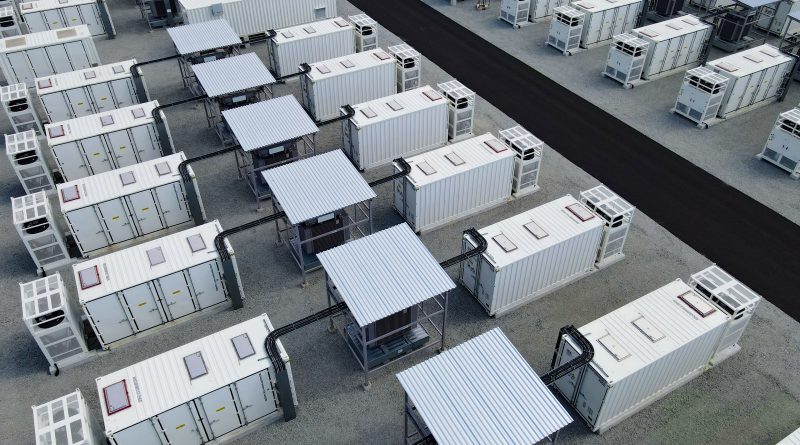
New York has awarded contracts for eight bulk energy storage projects totaling 950 MW, marking the first awards under the state’s Bulk Energy Storage Program.
The projects form part of a wider group of 21 storage and renewable energy developments announced by the New York State Energy Research and Development Authority on Sept. 23.
Together, the projects are expected to add 1.7 GW of large-scale energy resources, support more than 1,000 jobs and generate more than $3.7 billion in private investment. NYSERDA also expects more than $127 million in economic benefits for disadvantaged communities.
For the storage market, the scale of the first procurement is significant. The eight projects will add 950 MW of capacity across Western New York, the Finger Lakes, Hudson Valley, New York City and Long Island. They range from four to eight hours in duration.
The awards move New York closer to turning its storage targets into physical infrastructure. The state has set a goal of installing 6 GW of energy storage by 2030, including 3 GW of new bulk storage connected to the transmission system.
That leaves a large amount of capacity still to be procured and built over the next four years.
The first awards show the size of New York’s storage pipeline
NYSERDA launched its first Bulk Energy Storage solicitation in July 2025. Developers submitted proposals for 46 eligible projects representing about 6 GW of power capacity and 30 GWh of storage capacity.
Eight projects totaling 950 MW were selected.
The difference between proposed and awarded capacity shows that the development pipeline is already much larger than the first round of contracts.
It could also give the state a deeper pool of projects to consider as later procurement rounds move forward. NYSERDA is required to issue three bulk storage solicitations by 2027 and intends to issue the second by the end of 2026.
The wider policy framework calls for 3 GW of new bulk storage, along with 1.5 GW of commercial and community-scale storage and 200 MW of new residential storage.
NYSERDA estimates that the wider program could reduce projected statewide electricity system costs by nearly $2 billion.
Bulk storage can absorb electricity when supply is high and release it when demand rises. Longer-duration systems can extend that function across more hours.
The four- to eight-hour projects selected in the first round will therefore add more than battery capacity. They are intended to give the grid more flexibility as renewable generation grows and electricity demand changes.
New York is also investing in the demand side of the system
The storage awards came as New York moved ahead with a separate $1 billion expansion of its Sustainable Future Program.
Of that funding, $500 million will support building decarbonization and energy cost programs. The package includes $150 million for EmPower+, $150 million for affordable housing upgrades, $150 million for utility-scale thermal energy networks and $50 million for the Clean Green Schools Initiative.
A further $300 million will support renewable energy. NY-Sun will receive $200 million for solar incentives across homes, multifamily properties, businesses and municipalities. The New York Power Authority will receive $100 million for public renewable energy projects.
The state also allocated $87.5 million across programs covering food waste, composting, climate-resilient agriculture, methane reduction, urban forestry, forest restoration, parks and public lands.
Together, the announcements show the breadth of New York’s energy strategy.
Large batteries can store power and return it to the grid when needed. Solar and large renewable projects add generation. Building efficiency, heat pumps and thermal networks can reduce energy use or shift when demand occurs.
For utilities, developers and industrial energy users, this mix matters. A grid with more renewable generation must be able to manage changes in output. At the same time, rising electricity use from buildings, transport and other sectors can add pressure to transmission and distribution networks.
Storage cannot solve every grid constraint on its own. Neither can new renewable generation or building upgrades. New York’s approach points instead to a system where generation, electricity demand and flexible capacity are developed together.
The next challenge is turning contracts into operating assets
The next measure of progress will be delivery.
NYSERDA’s 950 MW procurement is a contract milestone. It does not mean 950 MW has been added to the operating grid.
The projects still need to complete development work and meet the requirements needed to enter commercial service. NYSERDA says the contracted projects are expected to become operational by the end of 2030.
That timeline puts execution at the center of the state’s storage strategy.
Permitting, local approvals, financing, equipment procurement and grid interconnection can all affect when energy projects enter service. Battery projects also face safety and siting requirements. New York updated its fire code at the end of 2025 following work by its Inter-Agency Fire Safety Working Group.
For the industry, this creates an important distinction between procurement and deployment.
The first bulk storage awards show that New York has attracted a large group of developers and has started converting policy targets into contracts. The 46-project bidding pool also indicates that more proposed capacity could be available for later rounds.
The next test is how quickly those contracts become connected assets. With a 6 GW target for 2030, construction, interconnection and commercial operation will increasingly provide the clearest measure of progress.
Source