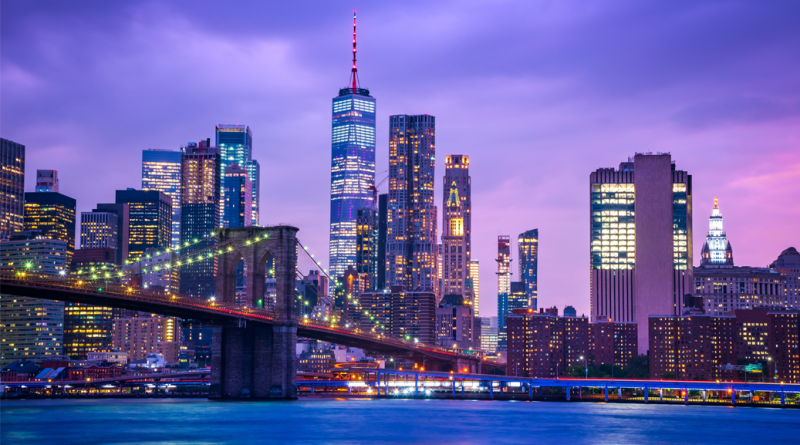
New York moves to dim the lights with dark skies bill

Subscribe to our free newsletter today to keep up to date with the latest energy, oil and gas news.
Light pollution has long been treated as a niche concern tied to astronomy enthusiasts and rural communities. That framing is shifting. In New York, lawmakers are advancing the Dark Skies Protection Act, signaling that artificial light at night is now a matter of infrastructure policy, environmental management and public health.
The scale of the issue has become harder to ignore. Around 80 percent of people in North America can no longer see the Milky Way due to skyglow. In dense urban regions, artificial brightness reshapes the night environment, turning darkness into a persistent haze. This is not only a visibility issue. It reflects how cities consume energy, design public space and interact with surrounding ecosystems.
Urbanization has intensified the problem. Expanding metropolitan areas rely on continuous illumination for safety, commerce and mobility. Yet much of this lighting is inefficient or misdirected, spilling upward or outward rather than focusing on its intended purpose. The result is a form of waste that is both visible and measurable.
What is changing is the recognition that light pollution intersects with broader policy priorities. Governments are now linking lighting practices to climate goals, biodiversity protection and operational efficiency. In that context, New York’s legislative push is less an isolated move and more part of a wider reassessment of how cities function after dark.
How the New York bill could reshape urban lighting
The Dark Skies Protection Act focuses on practical adjustments rather than sweeping restrictions. Its core requirement is that state-owned and state-funded buildings adopt lighting that is shielded and directed downward. This approach limits light spill and reduces skyglow without compromising visibility at ground level.
The bill also encourages the use of warmer color temperatures. Cooler, blue-rich lighting has been shown to scatter more in the atmosphere, contributing to the brightening of the night sky. By shifting toward warmer tones, the legislation aims to balance visibility with environmental considerations.
Another key element is timing and intensity. The proposal includes provisions to limit excessive brightness during overnight hours when activity levels are lower. This reflects a move toward adaptive lighting systems, where illumination aligns more closely with actual demand.
For public agencies and contractors, the implications are operational. Lighting specifications will need to align with new standards, influencing procurement, installation and maintenance processes. Over time, this could accelerate the adoption of smart lighting technologies that offer greater control and efficiency.
The economic case is tied closely to these operational changes. Poorly directed lighting represents wasted electricity. By improving targeting and reducing unnecessary output, agencies can lower energy consumption. While upfront adjustments may require investment, the long-term cost profile is expected to improve.
The environmental and economic case for darker skies
The environmental rationale for reducing light pollution extends beyond the night sky itself. New York lies along a major migratory corridor for birds, many of which rely on natural light cues to navigate. Artificial lighting can disorient these species, increasing collision risks and disrupting migration patterns.
Nocturnal wildlife is also affected. Changes in light levels alter feeding behavior, reproduction cycles and predator-prey dynamics. In urban and suburban ecosystems, these disruptions can accumulate, leading to broader imbalances.
From an energy perspective, the inefficiency of current lighting systems is a persistent issue. Light that escapes into the sky or illuminates unused areas contributes nothing to safety or productivity. Instead, it adds to electricity demand and associated emissions. Targeted lighting offers a direct way to reduce this waste.
Cities that have implemented similar measures report measurable benefits. Lower energy use translates into reduced operating costs, while improved lighting design can maintain or enhance perceived safety. This outcome is central to the appeal of dark sky policies. They do not require a trade-off between functionality and sustainability.
The broader trend is clear. Governments and organizations are treating lighting as part of a larger system that includes energy management, environmental stewardship and urban planning. Standards promoted by groups such as the International Dark-Sky Association are increasingly influencing policy frameworks.
What this signals for infrastructure, planning and industry
For industry stakeholders, the shift toward regulated lighting carries practical implications. Manufacturers of lighting equipment, construction firms and infrastructure planners will need to align with evolving specifications. This includes designing fixtures that minimize light spill and integrating controls that allow for dynamic adjustment.
The move also creates opportunities. Demand for compliant lighting solutions is likely to increase as regulations expand beyond state-owned assets. Companies that can deliver efficient, adaptable systems may find new avenues for growth.
Procurement practices will play a central role. As public agencies update their standards, suppliers will be evaluated not only on cost but also on performance against environmental criteria. This could reshape competitive dynamics within the lighting and construction sectors.
At a planning level, the emphasis on darker skies reflects a broader reconsideration of urban design. Cities are beginning to treat the night environment as a resource rather than a byproduct of daytime activity. This perspective influences everything from zoning decisions to infrastructure investment.
New York’s proposed legislation offers a case study in how targeted policy can address a diffuse problem. By focusing on measurable changes in lighting design and usage, it sets a framework that other regions may adapt. The outcome will depend on implementation, but the direction is clear. The way cities manage light is becoming a defining aspect of sustainable development.
Sources:
CBS News