Oikos Storage Limited focuses on targeted investment, digital rigor, and safety leadership

The global energy system is undergoing profound structural change. Operators are managing decarbonization targets, evolving fuel specifications, cyber risk, and regulatory complexity, all while maintaining the core requirement of uninterrupted supply. For infrastructure owners, particularly those operating at the nexus of global trade and national distribution, performance is no longer measured solely by scale but by resilience, credibility, and adaptability. Fuel storage and logistics terminals have become central to this challenge. As refining footprints shift and supply routes lengthen, terminals increasingly support energy security. Those that perform well are not simply reactive assets. They anticipate market change, invest deliberately, and maintain operational discipline through periods of uncertainty.
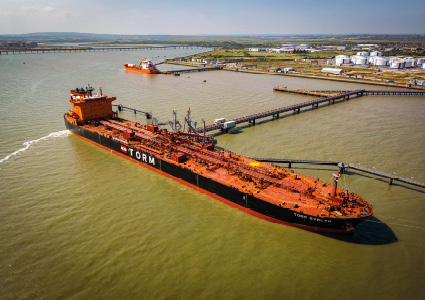
Oikos Storage Limited exemplifies this leadership-driven approach. It operates an independent bulk liquid storage terminal on Canvey Island, Essex, supporting the UK fuel supply chain 24 hours a day. Founded in 1936, the site has evolved into one of the UK’s most strategically significant independent terminals. It remains one of a handful of independent facilities connected to two national fuel pipeline systems, supplying major aviation and inland markets. “Independence defines how we operate,” shares Arun Sriskanda, Managing Director of Oikos Storage Limited. “Our role is to provide safe, compliant and efficient infrastructure. We facilitate the supply chain to function smoothly.”
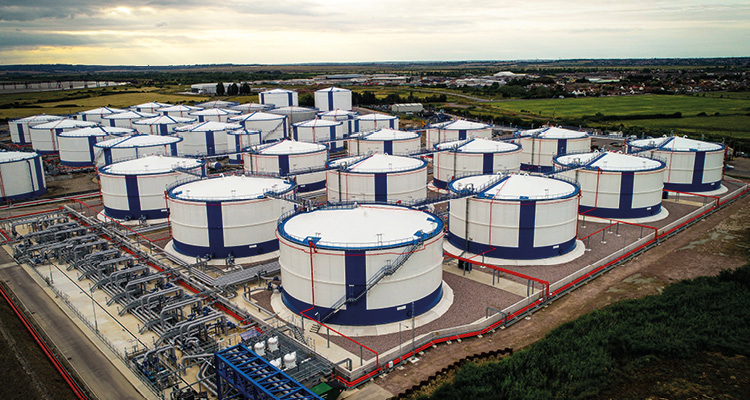
Independence brings clarity of purpose. Oikos focuses on asset integrity, availability, and safety rather than its position in the market. That focus has positioned the terminal as a trusted partner to fuel suppliers and energy marketers navigating increasingly complex logistics. The 70‑acre site includes two marine jetties, including a deep‑water LR2 jetty capable of handling vessels up to 120,000 deadweight tons, alongside more than 35 storage tanks with approximately 300,000 cubic meters of capacity.
Adapting to change
Over the past year, Oikos has experienced sustained growth throughput. The recovery of aviation demand following Covid has been a key driver, but so too has structural change in UK refining capacity. “Jet demand took several years to recover, but we saw that return clearly last year. At the same time, refinery closures have fundamentally altered inland product flows. When domestic production drops, imports play a much greater role,” Arun observes. Oikos has absorbed these shifts by managing higher vessel traffic, more diverse product origins, and more complex scheduling requirements. Fuels now arrive not only from traditional European hubs but increasingly from wider international markets.
Expanding for capability
Crucially, Oikos’ leadership position is reflected not only in how it handles volume, but in how it manages product complexity. The terminal currently stores jet fuel, diesel, gasoline, HVO, and ethanol, reflecting the evolving composition of transport fuels as they move through the UK supply chain. Introducing new products has meant targeted engineering work, including modifications to tank linings, import infrastructure, and firefighting systems. “Each grade brings its own technical requirements. You can’t treat them all the same. The work lies in adapting infrastructure carefully and methodically,” Arun comments.
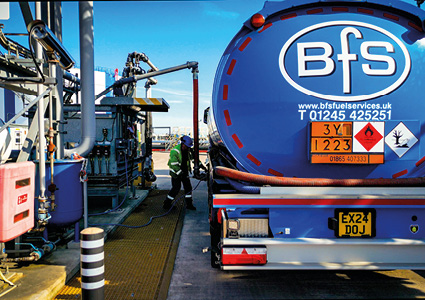
These incremental adaptations have become a strategic advantage. Rather than relying on generic capacity, Oikos has developed a reputation for safely handling diverse products, positioning the terminal as a flexible asset as the energy mix evolves. The same discipline supports Oikos’ approach to capital investment. Earlier in the decade, the business considered a significantly larger expansion as part of its long‑term planning. “We were assessing a very large expansion program at that point. With demand recovery, transition policy, and future fuel requirements still uncertain, that scale didn’t feel appropriate,” he remarks.
Rather than commit to a single, transformational build, Oikos paused, reassessed, and adjusted course. The result was a more modest scheme that better aligns investment with customer demand, product requirements, and regulatory clarity. The business has completed front‑end engineering design for up to eight new tanks, typically ranging from 7,000 to 12,000 cubic meters. Subject to final investment decision, construction would take approximately 24 to 30 months, with new capacity targeted for operation in 2028. “This approach gives us optionality. It allows us to add capacity where it makes sense, for the right products, at the right time,” Arun states.
Digitalization with operational judgment
Like many infrastructure operators, Oikos sees value in digital tools, but adoption is guided by operational realities rather than technological enthusiasm. “In the office environment, AI can clearly help people work more efficiently. We encourage that, but in a controlled way, using approved platforms,” he observes.
Where digital capability shows clear leadership potential is in maintenance and asset management. With thousands of components across tanks, pipelines, and jetties, intelligent maintenance planning can improve reliability. “There is enormous value in systems that help prioritize inspections, manage spares, and identify emerging risks. That’s where data and intelligence can genuinely support operational excellence,” he points out.
Safety embedded in culture
Oikos’ operating philosophy places safety at the center of performance, not as a lagging indicator but as an enabling condition. “I’m cautious about celebrating safety records. We want our team to have a mindset of chronic unease as we believe that will support the correct safety culture.” Arun reflects.
At Oikos, authority to halt work sits with every employee. “If something doesn’t feel right, people are expected to stop. That applies at every level,” he stresses. It has invested heavily in simplifying procedures and removing assumed knowledge. Clear documentation, attention to human factors, and visible follow‑through on reported issues reinforce trust and accountability across the workforce.
Reliability through partnerships
Delivering and sustaining infrastructure performance depends on capable partners. Oikos works with suppliers that understand regulated environments and long asset life cycles. Arun shares an example: “We work with a number of OEMs, who installed new assets for us and continue to provide ongoing support and annual maintenance services.” Such continuity reflects a leadership mindset that views asset performance over decades rather than just at commissioning.
Sector leadership beyond the fence line
Since March 2025, Arun has also served as President of the UK’s Tank Storage Association, championing the fundamental role infrastructure plays in underpinning a secure and resilient energy system, while fostering industrial competitiveness and economic prosperity. “The Association plays a vital role in engaging with policymakers. Storage and logistics often tend to operate unnoticed, yet they are essential to the effective functioning of the energy system,” he points out. Clear, stable regulation, he argues, enables responsible investment and reduces systemic risk. “The industry adapts well when it has time and clarity. Sudden shocks create vulnerability.”
Looking ahead, Oikos remain focused on execution, modernization, and disciplined growth. Demand remains strong, product complexity continues to increase, and infrastructure expectations are rising. By the end of the decade, Arun expects the terminal to be operating additional tank capacity, supporting established and transition fuel grades, and benefiting from progressively upgraded systems. “If we can combine incremental capacity growth, modernized infrastructure, and a clearer transition pathway, we will be well positioned to keep supporting the supply chain through whatever comes next,” he concludes.
In an energy system defined by transition, leadership increasingly belongs to operators that combine caution with confidence. Oikos’ approach demonstrates how independent infrastructure can lead not through scale alone, but through judgment, resilience, and long‑term commitment.