Oil markets face prolonged shock as Iran conflict escalates

Subscribe to our free newsletter today to keep up to date with the latest energy, oil and gas news.
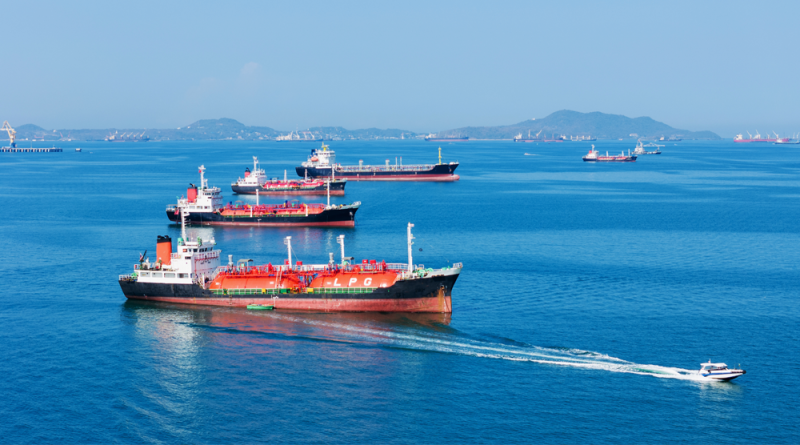
The latest escalation between the US and Iran has pushed the global oil system into a fragile state, exposing how concentrated and vulnerable modern energy supply chains remain. At the center of this disruption sits the Strait of Hormuz, a narrow maritime corridor through which roughly one-fifth of the world’s oil supply flows. Any threat to this passage carries immediate consequences for pricing, logistics and risk perception across global markets.
Recent weeks have shown how quickly that risk translates into price movement. Brent crude has surged past $100 per barrel, reflecting both real supply interruptions and anticipatory trading driven by uncertainty. Tanker traffic has slowed, rerouted or paused altogether in some cases, as insurers reassess exposure and operators weigh security risks. The result is not only delayed shipments but also a cascading effect across refining and distribution networks.
This is not a typical supply disruption driven by weather events or technical failures. It is geopolitical in nature, meaning the duration and severity are difficult to predict. Markets are pricing in scenarios that range from contained skirmishes to prolonged instability, with each outcome carrying different implications for inventory levels and production strategies.
What distinguishes this moment is the speed at which sentiment has shifted. Energy markets had entered 2026 with relative stability, supported by balanced supply and moderate demand growth. That equilibrium has now been replaced by a risk premium that reflects both physical disruption and the possibility of escalation. For traders, the question is no longer whether supply is tight, but how much tighter it could become.
Oil executives confront uncertainty and policy risk
Inside the industry, the tone is markedly more cautious than public political messaging suggests. While policymakers have framed the disruption as manageable or temporary, oil executives are signaling a more complex reality shaped by operational constraints and long-term planning risks.
Executives face a dual challenge. On one hand, they must respond to immediate disruptions in shipping and pricing. On the other, they must make capital allocation decisions in an environment where policy direction remains unclear. Investments in exploration, production and infrastructure depend on stability, yet current conditions offer little of it.
There is also a growing disconnect between government intervention and market dynamics. Strategic petroleum reserve releases and diplomatic signaling can ease short-term pressure, but they do not address structural vulnerabilities tied to chokepoints like the Strait of Hormuz. Industry leaders are acutely aware that temporary measures cannot fully offset sustained geopolitical risk.
Insurance costs, shipping premiums and financing conditions are already adjusting to reflect this new environment. For many firms, the issue is not only higher costs but also reduced visibility. Planning multi-year projects becomes more difficult when baseline assumptions about supply routes and geopolitical stability are in flux.
The phrase circulating among some executives, describing the situation as among the worst they have seen, reflects not just the scale of disruption but its unpredictability. Unlike past crises with clearer timelines or resolutions, this conflict introduces a level of ambiguity that complicates both operational and strategic decision-making.
Structural consequences for global energy markets
Beyond the immediate shock, the conflict is likely to accelerate structural changes that were already underway in global energy markets. One of the most significant is the reassessment of supply chain resilience. Companies and governments are now revisiting assumptions about concentration risk, particularly in critical transit routes.
Diversification of supply sources and transportation pathways is expected to gain momentum. This could involve increased investment in alternative shipping routes, pipeline infrastructure or regional production capacity. While such shifts take time, the current crisis may act as a catalyst for faster implementation.
Energy security is also returning to the forefront of policy discussions. Governments that had prioritized efficiency and cost optimization are now balancing those goals against resilience and redundancy. This shift has implications for everything from strategic reserves to regulatory frameworks governing energy imports and exports.
At the same time, volatility itself is becoming a defining feature of the market. Price swings driven by geopolitical developments can influence inflation, industrial costs and consumer behavior. For sectors reliant on stable energy inputs, this introduces an additional layer of complexity in planning and pricing.
The longer-term impact may be a more fragmented and regionally oriented energy system. As countries seek to reduce exposure to global chokepoints, trade flows could become less centralized. That would mark a departure from the highly interconnected model that has defined oil markets for decades.
For now, the industry remains in a reactive posture, managing immediate disruptions while preparing for a range of possible futures. The path forward depends not only on the trajectory of the conflict but also on how quickly market participants and policymakers adapt to a reality where geopolitical risk is once again a central driver of energy economics.
Sources:
Politico