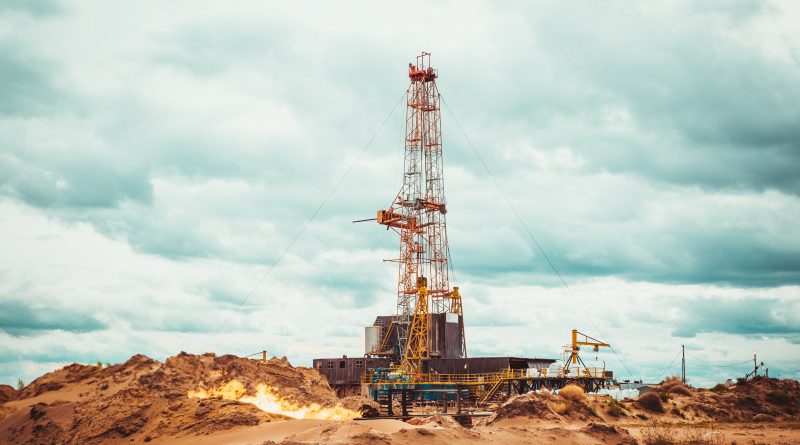
Report says AI could create a $500 billion opportunity in upstream oil and gas

Subscribe to our free newsletter today to keep up to date with the latest energy, oil and gas news.
Digital transformation has circulated through the oil and gas industry for years, often attached to promises of smarter fields, automated workflows and lower operating costs. What distinguishes the current cycle from previous waves of industrial technology is the speed at which artificial intelligence is moving from experimentation into measurable commercial value.
According to Rystad Energy, digitalization and AI could generate close to $500 billion in cumulative value for upstream exploration and production companies between 2026 and 2030 through operational efficiencies, higher production and shorter development timelines. The consultancy estimates operators investing in digital and AI technologies could capture an additional $80 billion in annual value by 2030 compared with 2025 levels.
The scale of the opportunity is already becoming visible in operational performance. ADNOC reported approximately $500 million in AI-driven value generation in 2023 and has committed roughly $1.5 billion toward digital capital expenditure targeting $1 billion in annual value creation. Equinor has also reported measurable gains, generating around $200 million in AI-related savings between 2021 and 2024 before adding another $130 million in 2025 alone.
These returns are reshaping how upstream companies think about digital infrastructure. What was previously treated as an IT modernization exercise is increasingly becoming a strategic operational priority tied directly to production efficiency, drilling performance and capital allocation.
The largest gains are coming from operational efficiency and production optimization
Rystad identifies four core workflow areas where AI and digital tools are creating value across upstream operations: asset development, operations and maintenance, exploration and reservoir development, and drilling, wells and production. Surface operations such as maintenance and facility management are currently seeing the fastest adoption rates, largely because the economic returns are immediate and measurable.
Predictive maintenance systems are allowing operators to identify equipment failures before shutdowns occur, reducing unplanned downtime and extending asset life. Remote operations centers are also lowering staffing requirements while improving field visibility across geographically dispersed assets. Some leading operators are reporting double-digit cost reductions from these systems.
Subsurface operations may ultimately represent the larger opportunity. Reservoir modeling, seismic interpretation and drilling optimization all generate enormous volumes of technical data that have historically required highly specialized human interpretation. AI systems are beginning to compress these workflows dramatically. In some cases, seismic interpretation timelines that previously required months are now being completed in around 10 days.
The impact extends beyond speed. Drilling optimization models are improving consistency across well performance, particularly in unconventional plays where operational repeatability matters as much as peak technical capability. Rystad estimates that average drilling improvement potential in US land operations is close to 10%, while more complex deepwater projects may see savings between 15% and 20% on average, with some extreme cases exceeding 50%.
This reflects a broader structural shift in how AI functions inside industrial environments. Rather than dramatically improving the best-performing assets, AI often lifts average operational performance closer to the level already achieved by top operators. That consistency may ultimately produce larger industry-wide gains than isolated technical breakthroughs.
Technology alone will not determine the winners
Despite the enthusiasm surrounding AI, upstream companies are discovering that technology availability is not the primary constraint. Scaling deployment across large organizations remains significantly more difficult than running isolated pilot projects.
Cloud migration programs can require several years to complete, while cybersecurity reviews and operational integration frequently delay deployment timelines. Cross-functional collaboration also remains a challenge in organizations where subsurface, drilling and production teams have historically operated within separate workflows and data structures.
Industry spending reflects the scale of the transition underway. Exploration and production companies are estimated to have spent roughly $25 billion on digital and AI purchases last year, with the broader market for related tools and services expected to surpass $35 billion annually by 2030 before approaching $50 billion by 2035.
The strongest performers are increasingly approaching AI as part of an integrated operating model rather than a standalone technology deployment. Oilfield service providers, hyperscalers and software integrators are becoming strategic partners as operators seek unified platforms capable of connecting equipment data, production systems and engineering workflows across assets.
This creates a widening competitive divide between early adopters and slower-moving operators. Digital maturity compounds over time because data quality, organizational knowledge and workflow integration improve with continued deployment. AI can accelerate a digitally mature organization, but it does not automatically create one.
The next phase of AI adoption may reshape upstream economics
Most current upstream AI applications still rely heavily on traditional machine learning systems trained on asset-specific operational data. These models require years of accumulated historical information and often need significant retraining when transferred between assets.
The industry is now watching whether newer forms of AI, including agentic AI systems, can reduce some of these limitations. These systems aim to automate more complex workflows, contextualize multiple data types and improve coordination between departments without requiring complete retraining for each operational environment. While still emerging, these capabilities could accelerate adoption timelines across the industry.
Under a higher adoption scenario, Rystad estimates annual value creation from upstream digital initiatives could reach $150 billion by 2030 and potentially exceed $300 billion by 2035. That would represent one of the largest industrial productivity shifts currently underway in the global energy sector.
For upstream operators, AI is becoming less about isolated automation projects and more about building an operating system for future competitiveness. As digital workflows become embedded across exploration, drilling and production, operational intelligence may increasingly sit alongside reserves and production scale as one of the industry’s defining competitive advantages.
Source