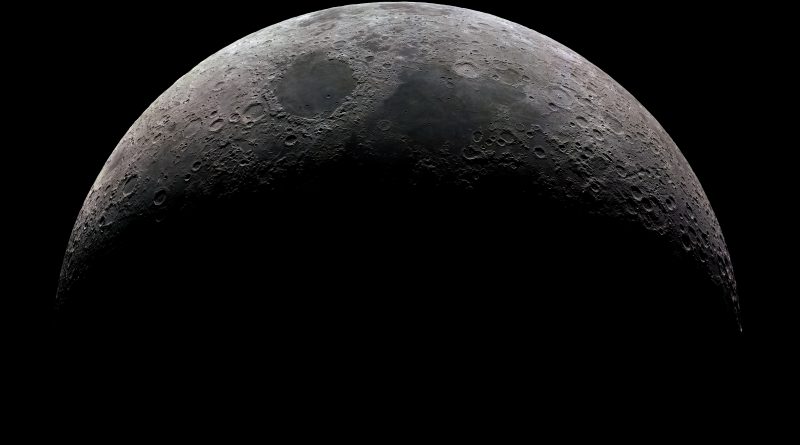
The US is targeting nuclear reactors on the moon by 2030

Subscribe to our free newsletter today to keep up to date with the latest energy, oil and gas news.
The Trump administration has directed NASA to accelerate plans to deploy nuclear reactors on the Moon, with a target to have a system ready by 2030. The April 2026 memorandum sets clear expectations for both timeline and capability, including multi-year operation and scalability beyond initial deployments.
The directive calls for a new class of space-based nuclear systems capable of delivering at least 20 kilowatts of electric power, with designs that can scale toward 100 kilowatts. It also tasks the Department of Energy with assessing whether the US industrial base can produce multiple reactors within a five-year window. The objective is not a single demonstration, but repeatable production capacity.
The policy shifts lunar nuclear power out of research and into execution. It ties technical development to industrial readiness and compresses timelines that previously stretched well into the next decade. That combination signals a broader intent: energy is now treated as core infrastructure for space operations.
Why the technology race for lunar reactors is accelerating
NASA and the Department of Energy have spent years developing fission surface power systems, with groundwork established through the Kilopower project. A 2018 test demonstrated stable operation of a small reactor, validating the concept under controlled conditions.
The current mandate introduces urgency. The requirement for systems that can operate for years without refueling, combined with minimum output targets, forces design decisions around durability, autonomy, and scalability. NASA’s existing program targets about 40 kilowatts, enough to support continuous operations without reliance on sunlight.
Engineering constraints remain tight. Reactors must be compact enough for launch, shielded against radiation, and capable of functioning with limited human intervention. Heat management is a critical challenge, as excess thermal energy must be dissipated in a vacuum through radiator systems.
Deployment adds another layer of complexity. Systems must survive launch stress, transit conditions, and automated installation on the lunar surface. These requirements are shaping advances in materials, thermal control, and autonomous operations.
The timeline set by the administration reduces room for incremental development. It prioritizes systems that can move from prototype to deployment within a defined window, aligning technical milestones with policy objectives.
The industrial push behind off-Earth energy systems
The directive places equal weight on industrial capacity. The instruction to assess production of multiple reactors within five years introduces a manufacturing challenge that extends beyond NASA’s traditional scope.
This approach brings in a wider set of stakeholders. Reactor developers, aerospace contractors, fuel suppliers, and component manufacturers are all part of the emerging supply chain. The structure of the program, with milestone-based contracts and multiple vendors, reflects a strategy designed to build competition and reduce dependency on a single provider.
The model mirrors elements of terrestrial energy development, particularly in the small modular reactor segment. Both rely on compact, scalable systems and emphasize repeatable manufacturing. In the space context, constraints are tighter, but the underlying logic is similar: standardization supports scale.
The Department of Energy’s role underscores the importance of fuel availability, testing infrastructure, and safety analysis. These are not marginal considerations. They determine whether the program can move from concept to sustained production.
This shift positions lunar nuclear power as an industrial policy initiative as much as a space program. It connects federal investment with private sector capability, with the expectation that technologies developed for the Moon may extend into other markets.
Energy as a strategic asset in space competition
The push for lunar reactors is unfolding alongside increased activity from other spacefaring nations. China’s lunar ambitions, in particular, have sharpened the focus on long-term presence rather than short missions.
Energy systems play a central role in that competition. Continuous power enables habitats, scientific operations, and potential resource extraction. Without it, activity remains intermittent and limited in scope.
A deployable, scalable nuclear system provides an operational advantage. It supports longer missions, broader geographic coverage, and more complex infrastructure. That capability can influence how quickly a nation expands its presence on the lunar surface.
The policy also links surface power to propulsion. Nuclear electric propulsion is identified as a future application, with implications for cargo and crew transport beyond the Moon. This connects lunar infrastructure with longer-term goals, including missions to Mars.
The emphasis on scalability and industrial readiness suggests a sustained effort. The Moon is being treated as a proving ground for systems that could define the next phase of space operations.
What NASA’s moon plan means for industry and future space economies
The development of lunar nuclear power systems creates opportunities across multiple sectors. Aerospace companies, advanced manufacturers, and energy firms are positioned to contribute to design, production, and integration.
Demand will extend to specialized components, materials, and control systems. The requirement for reliability in extreme conditions sets a high bar, which in turn drives innovation that may carry over into terrestrial applications.
Compact reactor design, autonomous operation, and thermal management are areas where advancements could influence broader energy markets. The overlap between space and ground-based nuclear development is likely to grow as both fields pursue smaller, more flexible systems.
Reliable power also underpins the concept of a lunar economy. Resource extraction, in-situ manufacturing, and logistics networks depend on continuous energy supply. Without it, these activities remain constrained.
Risks remain tied to regulation, public perception, and technical performance. Nuclear systems in space introduce questions around safety, oversight, and long-term governance. These factors will shape how quickly projects move from planning to deployment.
Sources