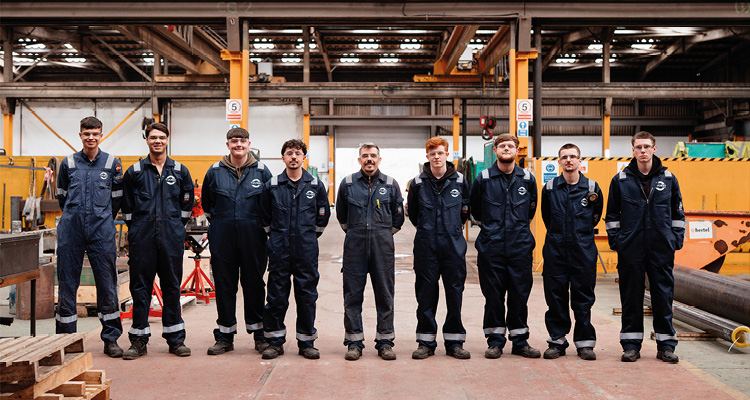
Tulway Engineering expands its footprint as energy infrastructure investment increases across the UK

When Tulway Engineering (Tulway) opened its new state-of-the-art Teesside facility in early 2025, it was more than just an expansion project. The investment brought in significant fabrication capacity, created about 50 new jobs, and set the company up to support some of the UK’s most important energy transition projects.
For Managing Director Kevin Tully, the new facility is the next chapter in a story that started nearly 30 years ago. Since he founded Tulway in 1998, he has led its growth into a mechanical engineering specialist for sectors like hydrogen, carbon capture, nuclear, energy storage, and industrial infrastructure.
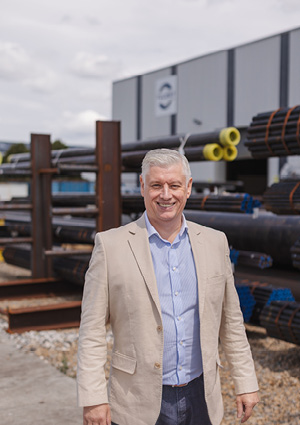
Today, Tulway operates from facilities in the North West and Teesside, providing fabrication, installation, construction, and project management services across the UK. The company specializes in high-integrity pipework and mechanical engineering solutions for industries that rely on compliance, traceability, and top welding standards.
Tulway’s recent expansion reflects bigger shifts happening across the UK’s industrial landscape. Investment in hydrogen, carbon capture and storage (CCUS), sustainable aviation fuel, energy storage, and industrial decarbonization is driving demand for engineering companies that can deliver the infrastructure these developments need.
For Kevin, the real challenge isn’t spotting opportunities. It’s building the capacity to respond before those opportunities appear. While most of the market waited for major energy transition projects to move forward, Tulway expanded its facilities and invested ahead of demand. “We’ve grown by investing ahead of the curve. We keep developing our facilities, accreditations, digital quality systems, and people because we believe the UK is about to enter a new era of industrial investment.”
Flexible approach
This forward-thinking mindset has shaped Tulway from the start. Still family-owned, the company’s growth comes from a willingness to invest before new opportunities fully take shape. Increasingly, Kevin focuses on preparing Tulway for what’s next, making sure the facilities, procedures, and people are ready well before major projects ramp up.
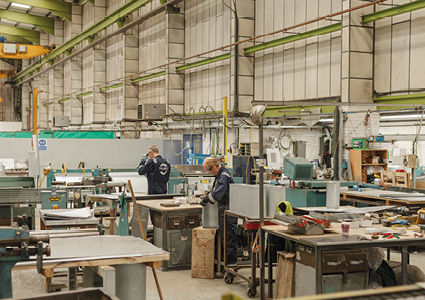
The Teesside expansion is a great example. Tulway invested to strengthen its ability to support multiple sectors at once as energy transition projects pick up speed. Kevin points out, “The new facility is a strategic investment, not just a response to one contract. Along with our existing workshop, it gives us about 100,000 square feet of specialist fabrication capacity at our Teesside campus. It’s increased our capacity and improved how we separate materials, control quality, and handle big programs.” The facility features dedicated carbon and non-ferrous fabrication areas, pressure-testing capabilities, large storage areas, and extensive lifting equipment. It has 11 remotely operated overhead cranes, allowing multiple fabrication bays to run at the same time and keeping work flowing across large and complex assemblies.
As project requirements change, Tulway can dedicate resources accordingly. “For customers, this means we can reserve bays or even sections of the workshop for their work. That’s becoming crucial on major energy programs where clients need capacity, material separation, full traceability, and reliable schedules,” Kevin notes. These needs show up most in hydrogen infrastructure, which Tulway views as a natural extension of its gas industry experience. “Hydrogen is strategically very important for us because it sits at the intersection of our experience and the future of energy. We already know high-pressure gas infrastructure, controlled welding, material traceability, and the standards major network operators expect.”
TIMS launch
Kevin believes hydrogen is reshaping how contractors work, not just extending traditional gas projects. “Hydrogen service makes the industry rethink things like material compatibility, hardness, heat input, consumable control, weld procedure qualification, inspection, and the risk of hydrogen-assisted cracking.” The move to hydrogen also raises expectations for engineering assurance. Areas that used to be standard gas-pipeline practice now need much more rigorous review and documentation.
Tulway is also preparing to launch TIMS, the trademarked Tulway Intelligent Maintenance System, an AI-led platform designed to support condition monitoring, maintenance planning and plant reliability. Built to combine equipment data, inspection records, and live monitoring information in one user-friendly system, TIMS will give customers a clearer view of asset performance and emerging maintenance needs. The platform is due to go live shortly, with Tulway already having customers signed up to adopt the system as part of its wider mechanical maintenance offering.
Delivery support
The same trend toward long-term infrastructure investment is creating new opportunities in Teesside’s carbon capture projects, and Tulway is looking to play a bigger role in that buildout.
Tulway works across fabrication, pipework installation, welding qualifications, site delivery support, and pre-construction for projects throughout the CCUS network. “We’re positioning Tulway as a regional partner for the mechanical infrastructure needed across the Teesside CCUS program.” For the team, CCUS’s real potential isn’t in individual projects but in the broad infrastructure ecosystem growing around them. “CCUS takes capture plants, compressor systems, process pipework, utility connections, above-ground installations, upgrades to existing facilities, and a lot of supporting infrastructure.”
Kevin believes the sector’s importance goes beyond construction itself. He sees a broader ecosystem emerging in the region, one that could reshape manufacturing and engineering supply chains. “This program could turn into a new industrial ecosystem, not just a single construction project,” he observes. As it grows, Tulway plans to support delivery through regional fabrication shops, installation teams, and engineering know-how. “A strong regional supply chain means less transportation, faster response times, more local jobs, and more economic value staying in Teesside.”
Tulway continues pursuing opportunities in hydrogen, CCUS, sustainable aviation fuel, energy storage, and nuclear. Recently, the company proved its capabilities on one of its biggest projects, delivering about 12 miles of process pipework and over 26,000 welds. Tulway also locked in a five-year extension with Altrad and started supporting Highview Power’s liquid-air energy storage developments.
Even with so many opportunities, workforce development is still one of Kevin’s top priorities. “The UK can announce billions in infrastructure investment, but those programs won’t happen without welders, pipefitters, platers, supervisors, inspectors, and welding engineers.” That labor challenge led Tulway to invest in apprenticeships and plan a training school that combines classroom learning with hands-on experience in a real fabrication shop. “The goal isn’t just to teach someone how to weld. It’s about building an understanding of quality, safety, materials, traceability, and the standards major energy projects demand.”
This focus on well-rounded skills shows a leadership style that values long-term capability over quick growth. As industry demand grows, Kevin believes the companies that keep high technical standards and invest in people will be best positioned to support the next wave of industrial investment.
Ready for the future
Looking ahead, Tulway’s next target is the Humber. Combined with current operations in the North East and North West, a Humber location would round out Tulway’s regional footprint. “We already have a strong presence in the North West, near the HyNet program, and in the North East, at the center of the Teesside developments. Setting up in the Humber would put Tulway at the heart of the three main English CCUS regions.”
As the UK’s energy transition projects get closer to reality, Kevin sees the conversation shifting. “The question isn’t whether there will be opportunities. It’s whether the regional supply chain and skills base will be ready to seize them. Tulway plans to be ready.”