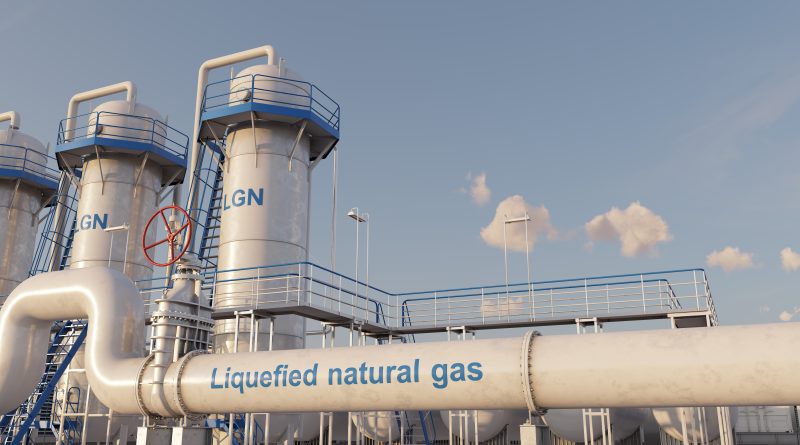
US LNG exports set for major growth through 2027

Subscribe to our free newsletter today to keep up to date with the latest energy, oil and gas news.
The US is entering a new phase in natural gas exports, with liquefied natural gas volumes expected to rise sharply through 2027. A new U.S. Energy Information Administration (EIA) forecast points to nearly 30% growth, driven by a wave of new export terminals and incremental capacity increases across existing facilities. Net exports are projected to reach 20.5 billion cubic feet per day by 2027, reinforcing the country’s position as a cornerstone of global gas supply.
This expansion reflects more than domestic production strength. It aligns with structural changes in global energy demand, where LNG has become central to energy security strategies across Europe and parts of Asia. At the same time, pipeline exports, particularly to Mexico, continue to grow, strengthening regional integration in North America.
New LNG infrastructure is set to expand US export capacity at scale
A series of large-scale infrastructure projects underpins the expected increase in exports. Much of this expansion is outlined in the EIA’s Short-Term Energy Outlook, which tracks the phased startup of major LNG facilities through 2027. Facilities such as Corpus Christi Stage 3 and Golden Pass LNG are set to begin ramping up operations, followed by Port Arthur LNG and Rio Grande LNG. Together, these projects will add several billion cubic feet per day of export capacity within a relatively short timeframe.
Current US peak export capacity stands at 18.3 Bcf per day. Incremental additions from new liquefaction trains and approved expansions are expected to push this figure beyond 20 Bcf per day by 2027. EIA projections indicate LNG exports will average 17.0 Bcf per day in 2026, with further growth expected in 2027 as new capacity ramps up. Projects are increasingly developed in phases, allowing operators to bring capacity online faster while managing capital exposure.
Utilization rates across existing terminals remain high, often exceeding 85%. This indicates that new capacity is entering a market with established demand. Even small increases in utilization, supported by global supply disruptions, can translate into meaningful export gains.
Investment levels reflect long-term confidence in LNG demand. Individual projects often exceed $10 billion in capital expenditure, signaling expectations of sustained global reliance on gas as a transition fuel.
Global market disruptions and regional demand shifts are driving exports
Global supply disruptions are increasing demand for US LNG. Recent constraints in the Strait of Hormuz, combined with damage to key export infrastructure in Qatar, have removed a meaningful share of global supply from the market. EIA estimates suggest these disruptions account for more than 10 Bcf per day, tightening availability and increasing reliance on alternative exporters.
Europe remains the primary destination for US LNG. EIA data show US LNG exports to Europe reached record levels in 2025, exceeding 10 Bcf per day. This shift reflects long-term efforts to reduce dependence on pipeline gas from Russia and diversify supply sources. Countries such as Italy and Poland have accelerated imports, reinforcing the US role in European energy security.
In contrast, exports to Asia have declined in the short term. EIA data show exports to Asia fell in 2025, reflecting trade tensions and pricing dynamics that redirected cargoes away from markets such as China. This shift highlights the flexibility of US LNG, where destination-free contracts allow cargoes to move toward higher-value markets.
Emerging demand centers are also influencing trade patterns. EIA data indicate exports to countries such as Egypt increased sharply, driven by domestic supply constraints. These evolving flows suggest a more dynamic global LNG market, with the US at its center.
Pipeline exports to Mexico strengthen North American energy integration
While LNG dominates attention, pipeline exports remain a critical component of US natural gas trade. EIA forecasts indicate exports to Mexico will rise steadily, reaching 10.0 Bcf per day by 2027. This growth is driven by expanding demand for gas-fired power generation and industrial activity.
Mexico’s energy strategy increasingly relies on US natural gas. Cross-border pipelines provide a cost-effective and reliable supply, supporting both domestic consumption and emerging LNG export capacity. New facilities, including Energía Costa Azul and Fast LNG Altamira, are expected to come online in the coming years, using US pipeline gas as feedstock.
This dynamic creates a secondary export pathway. Gas transported via pipeline to Mexico can be liquefied and shipped to global markets, including Asia. This approach offers logistical advantages, particularly for reaching Pacific markets without relying solely on US Gulf Coast terminals.
The result is a more interconnected North American energy system. Pipeline infrastructure supports bilateral trade while extending the global reach of US natural gas.
What rising US gas exports mean for global pricing and energy strategy
The expansion of US LNG exports carries significant implications for pricing and market stability. As outlined in EIA outlooks, increased supply has the potential to moderate global LNG prices over time, particularly as new capacity reduces tightness in the market. Short-term volatility remains tied to geopolitical risks and supply disruptions.
One defining feature of US LNG is its pricing structure. Contracts linked to Henry Hub benchmarks offer an alternative to oil-indexed pricing commonly used by other exporters. This structure provides transparency and flexibility, making US LNG attractive to a broad range of buyers.
As export volumes grow, the US is positioned to act as a swing supplier. The ability to redirect cargoes based on market conditions enhances liquidity and responsiveness in global gas trade. This role becomes more critical during periods of disruption, when supply gaps must be filled quickly.
For energy-importing countries, the expansion of US LNG supports diversification strategies. Reliance on a wider range of suppliers reduces exposure to geopolitical risk and supply shocks. For producers and infrastructure developers, it reinforces the long-term relevance of LNG within the global energy mix.
The trajectory of US natural gas exports reflects a more interconnected market, where infrastructure, geopolitics and pricing mechanisms increasingly shape global outcomes.
Source
U.S. Energy Information Administration