Why energy resilience is becoming an operational imperative. By Lee Todd

Sharp swings in global energy markets since the start of 2026 have been a stark reminder of how quickly external shocks can disrupt industrial cost structures. For energy-intensive businesses, however, the bigger story is not the latest bout of instability itself. It’s that exposure to fossil-linked volatility remains a structural business risk.
Decarbonization and electrification are often framed as long-term sustainability measures. But for many businesses, they are and have always been about more than emissions reduction. They are increasingly central to resilience, efficiency, operational control, and long-term competitiveness.

This wasn’t because of any single geopolitical event or market cycle. What recent instability has only done is sharpen the commercial case, reinforcing the urgency of reducing exposure to unpredictability and strengthening the logic for electrification, storage, and smarter energy management.
From this perspective, decarbonization is no longer just an environmental objective. It’s an operating model shift that reshapes how organizations think about risk, control, and long-term energy costs.
Redefining cost efficiency
Across industries, businesses are facing rising energy costs, supply instability, and mounting regulatory pressure. Geopolitical tensions, fragmented supply chains and tightening carbon frameworks are no longer isolated changes; they are structural forces shaping the global energy landscape.
At the same time, evolving customer expectations and compliance requirements are accelerating the shift toward cleaner and more transparent energy use. For one, carbon regulation is becoming more immediate and more operational, with the European Commission having now published the very first quarterly Carbon Border Adjustment Mechanism (CBAM) certificate price in April as part of its 2026 rollout.
In this environment, energy is increasingly shaped by external forces beyond an organization’s direct control. Where that exposure isn’t adequately managed, organizations often end up paying a premium – not only for energy itself, but for the uncertainty and risk embedded in it.
Against this backdrop, the definition of cost efficiency has fundamentally shifted from minimization to predictability. In volatile markets, the lowest unit price of energy is not necessarily the most efficient outcome if it comes with higher exposure to price swings and operational disruption. Efficiency is increasingly defined by the ability to stabilize long-term energy costs and operate within clearer financial boundaries.
Ultimately, cost efficiency is no longer just about reducing spend, it’s about reducing exposure. Organizations that can exert greater control over how energy is sourced, managed, and consumed are better positioned to improve planning certainty, manage risk, and avoid the hidden costs of volatility.
Electrification as a strategic lever
For industrial operators, reducing exposure requires more than tactical cost management. It calls for a deliberate redesign of the underlying energy architecture, with electrification at its core.
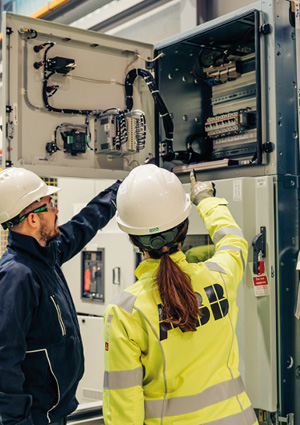
Electrification is increasingly the foundational lever for reducing exposure to fossil fuel volatility and repositioning energy as a controllable input rather than a purely uncontrollable external cost. By electrifying infrastructure, organizations can integrate renewable generation, enable digital energy management, and build systems that are inherently more stable and efficient. One could argue that this makes it the very foundation for greater energy control, resilience, and long-term operational agility.
Once infrastructure is electrified, businesses can begin to layer in the technologies that make decarbonization commercially powerful: distributed energy resources, storage, and real-time energy management platforms. We’re already seeing that the need for flexibility is growing fast: the IEA expects the world to add, on average, 50 percent more electricity demand each year through 2030 than it did over the past decade.
Taken together, these enhancements enable organizations to run leaner, cleaner and with greater confidence. Rather than simply consuming energy, operators can monitor, optimize and manage it in real time, improving reliability while reducing waste and inefficiency. In this model, energy is no longer a passive input, but an actively managed component of operational strategy.
A commercially-minded approach to decarbonization
But perhaps the most significant shift is not technological, but financial. Historically, the constraint on large-scale electrification has not been capability but capital. Energy infrastructure upgrades, storage deployment, and system modernization have consistently competed with core business priorities for balance sheet allocation, slowing adoption despite clear long-term value.
Today, that barrier is increasingly being removed. The emergence of outcome-based and ‘as-a-service’ models is fundamentally changing how energy systems are financed and delivered, and critically, how decarbonization becomes financially achievable at scale.
Battery Energy Storage Solutions-as-a-Service (BESS-as-a-Service), for example, can remove the burden of large upfront capital expenditure while providing cost savings, operational flexibility and resilience. Instead of owning and operating the battery asset themselves, organizations can access storage through a service model that shifts energy resilience into a more predictable operational expense – this is a significant benefit, especially when you consider that approximately 50 percent of costs associated with installing BESS is attributable to operations and maintenance.
In doing so, businesses can transfer elements of the technical, performance, and lifecycle risk to a trusted partner, with service-level agreements and performance commitments helping to de-risk adoption and ownership alike.
This also creates greater flexibility in how energy is used, stored and dispatched. In the right operating environment, storage can help businesses better manage price variability through energy arbitrage, support continuity, and optimize energy consumption without compromising reliability. In other words, as-a-service models are helping to turn decarbonization from a long-term aspiration into an executable commercially-driven strategy.
Reimagining uncertainty as a competitive advantage
Today, energy is no longer just a cost center. It’s becoming a strategic lever that can be optimized operationally, financially, and environmentally. And while the current energy landscape is often described in terms of disruption, disruption can also create new opportunities for some.
Some businesses will remain exposed to the same cycles of volatility, absorbing cost shocks and reacting to regulatory pressure, while others can use this moment as an opportunity to re-architect their energy systems entirely.
What I’ve learned from my conversations with customers is that the dividing line is seldom ambition, but action. Those that move decisively to electrify and adopt more flexible models can secure long-term advantages in cost predictability and resilience. Those that delay may find themselves increasingly exposed to the volatility and inefficiencies of aging energy systems.
And in a world where unpredictability is seemingly the only constant, greater control over energy may very well be the most valuable asset of all.
Lee Todd
go.abb/electrification
Lee Todd is VP, Energy & Carbon, at ABB Electrification Service, a global technology leader enabling the efficient and reliable distribution of electricity from source to socket. With more than 50,000 employees across 100 countries, it collaborates with customers and partners to solve the world’s greatest challenges in electrical distribution and energy management.