Why Gulf states are racing to bypass the world’s biggest oil chokepoint

Subscribe to our free newsletter today to keep up to date with the latest energy, oil and gas news.
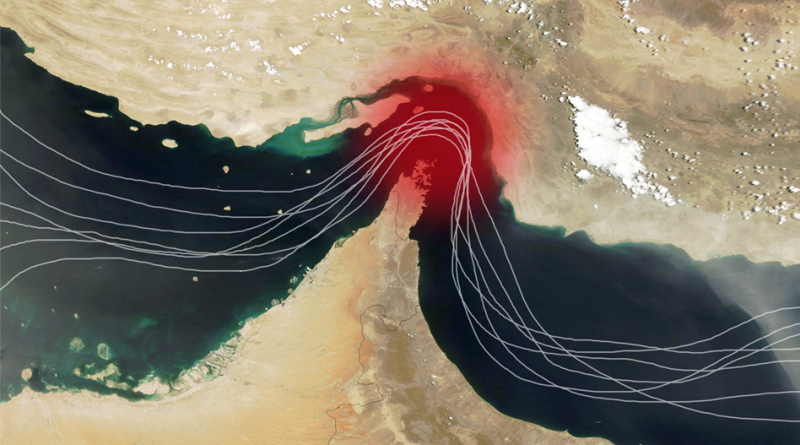
For decades, the Strait of Hormuz occupied a unique position in the global energy system. Roughly a fifth of the world’s seaborne oil trade moved through the narrow waterway linking the Persian Gulf with the Arabian Sea, making it one of the most strategically significant pieces of maritime infrastructure in the world. Any disruption carried immediate consequences for energy markets, shipping companies and importing nations.
Recent tensions have exposed the scale of that vulnerability. The latest squeeze on shipping through Hormuz has triggered a reassessment that extends far beyond short-term oil prices. Across the Gulf, governments and national oil companies are accelerating investments in pipelines, export terminals, storage facilities and logistics networks designed to reduce dependence on a single chokepoint.
What began as a response to geopolitical risk is becoming a restructuring of global energy trade. The result is a shift that could reshape oil flows for years, altering the balance between producers, consumers and transport providers in one of the world’s most important commodity markets.
The world’s most important oil chokepoint no longer looks untouchable
The significance of the Strait of Hormuz rests on a simple reality. It remains the primary export route for many of the Middle East’s largest oil producers, including Saudi Arabia, Iraq, Kuwait and the United Arab Emirates. Around 20 million barrels of crude and petroleum products typically pass through the corridor each day, much of it destined for Asian economies that rely heavily on imported energy.
Historically, markets treated Hormuz disruptions as temporary events. Price spikes followed periods of instability, but the assumption remained that shipping would eventually normalize. Recent developments have challenged that view.
Energy companies, refiners and governments are recognizing that resilience matters as much as production capacity. The ability to move oil reliably has become a competitive advantage in its own right.
The consequences are particularly important for Asia. China, India, Japan and South Korea collectively account for a substantial share of Gulf crude demand. Any interruption to flows can ripple through manufacturing supply chains, transportation networks and industrial production. Importers are paying closer attention not only to where oil is produced but also how it reaches market.
This shift reflects a broader change in energy security strategy. Rather than focusing exclusively on securing supplies, governments and companies are examining the infrastructure that supports those supplies. The conversation has moved beyond barrels in the ground to pipelines, ports, storage tanks and shipping routes.
Pipelines, ports and storage are becoming strategic assets
The most visible response has come from Saudi Arabia and the United Arab Emirates, both of which have invested heavily in infrastructure that bypasses Hormuz.
Saudi Arabia’s East-West Pipeline, which links oil fields in the eastern part of the kingdom with export facilities on the Red Sea coast, has gained renewed importance. By directing crude toward Red Sea terminals, Saudi Arabia can continue serving international customers without relying entirely on Gulf shipping routes.
The UAE has pursued a similar strategy through its pipeline network connecting inland production areas to the port of Fujairah on the Gulf of Oman. Located outside the Strait of Hormuz, Fujairah has evolved into one of the world’s most important energy hubs, combining export facilities with extensive storage capacity and bunkering services.
The investments extend beyond pipelines. Governments across the region are expanding storage infrastructure, modernizing ports and developing logistics corridors designed to provide greater flexibility during periods of disruption.
These projects require billions of dollars in capital expenditure and years of planning. That level of commitment suggests policymakers view the challenge as structural rather than temporary.
The trend also reflects lessons learned from broader supply chain disruptions in recent years. Companies across multiple industries have sought to diversify transportation networks and reduce single points of failure. Energy producers are applying the same logic to oil exports.
A new energy geography is taking shape across the Middle East
The cumulative effect of these investments is the emergence of a new energy geography across the region. Historically, oil production and export infrastructure developed around established shipping routes. Today, the emphasis is shifting toward optionality. Producers want multiple pathways to market, allowing them to reroute exports when geopolitical tensions, security concerns or operational disruptions arise.
That transition carries implications beyond the Gulf. Shipping companies may need to adapt to changing trade patterns. Energy traders could face new pricing dynamics as alternative routes gain importance. Importing nations may reassess procurement strategies based on infrastructure resilience rather than production volumes alone.
The shift may also influence future investment decisions. Countries capable of offering reliable and diversified export routes could attract greater interest from buyers seeking long-term supply security. Infrastructure, once viewed as a supporting asset, is becoming a central element of competitive positioning.
For oil markets, the broader lesson is clear. The defining challenge is no longer limited to producing enough crude. The ability to transport that crude efficiently and consistently is becoming equally important.
As geopolitical uncertainty persists, the Gulf’s largest producers appear to be planning for a future in which resilience is valued alongside resource abundance. Pipelines, export terminals and logistics networks may not attract the same attention as oil fields, but they are increasingly shaping the future of global energy trade.
Sources:
The Wall Street Journal